-2.png)
A GTM tech stack is an integrated collection of sales, marketing, customer success, and RevOps tools that work together to generate, convert, and retain customers. By centralizing CRM data, automating workflows, connecting buyer signals, and eliminating tech sprawl, businesses can improve operational efficiency, pipeline visibility, attribution, and revenue growth.
Why are most tech stacks disconnected?
Most companies have a graveyard of once-promising tech stacks buried under a mountain of inefficiency.
How it Happens
Step 1: Rapid Tool Adoption – Every tool solves an immediate pain, but no one thinks about the big picture.
Step 2: Disconnected Systems – Each team runs its own software, leading to scattered data and messy reporting.
Step 3: The RevOps "Fix" – Someone suggests RevOps, but instead of solving the problem, another tool is added.
Step 4: The Cycle Continues – Repeat steps 1-3.
The tech stack wasn’t enabling revenue. It was suffocating.
Why GTM Efficiency Matters More Than More Tools
Adding more tools won’t fix a broken revenue engine. In this fireside chat, RevPartners CEO Brandon Tolleson and Tech CXO’s Kent Elmer discuss why sustainable growth isn’t about tool sprawl—it’s about GTM efficiency.
Watch to learn how to align resources, measure the right metrics, and optimize your go-to-market motion. 👇
What’s the real job of a GTM tech stack?
A tech stack isn’t just a collection of tools, it’s the foundation of your Go-To-Market (GTM) engine.
What a Well-Designed GTM Tech Stack Should Do
- Make work easier. Automate repetitive tasks, speed up sales cycles, remove bottlenecks.
- Provide a clear view. Sales, marketing, and customer success should all have access to accurate, up-to-date data.
- Scale with your business. The stack should adapt as you grow, rather than becoming a roadblock.
Eventually, most tech stacks create more problems than they solve.
Key Takeaways
-
Fewer, better-integrated tools beat a bloated stack every time.
-
Connect data across marketing, sales, and CS. One source of truth.
-
Automate repetitive tasks so your team works on revenue, not admin.
-
Unify community, outbound, events, gifting, and compensation in one GTM engine.
-
The best stack doesn’t just look good, it drives measurable growth.
Why You Should Stick Around
This isn’t another generic list of “15 must-have sales tools for 2025”
What You’ll Learn
- The fourteen essential platforms every B2B company actually needs.
- How these tools work together to create a seamless GTM motion.
- Why a leaner, smarter GTM tech stack always beats bloated, disconnected systems.
Now let’s build a tech stack that actually works.
What tools are essential for a scalable GTM stack?
How does PandaDoc speed proposals and contracts?

PandaDoc streamlines the contract process, reducing deal friction and improving close rates.
-
Removes paperwork bottlenecks: Digital proposals get deals signed faster.
-
Increases close rates: Prospects engage with dynamic, interactive documents.
-
Tracks engagement in real time: See when prospects open, review, or sign documents.
Why is HubSpot the core CRM and revenue engine?
HubSpot is an all-in-one revenue engine that connects marketing, sales, and customer success in a single platform.
Why HubSpot Is Essential
- All-in-one platform: CRM, marketing automation, and service management in one place.
- Revenue visibility: Tracks every deal, interaction, and touchpoint to improve forecasting.
- Sales automation: Reduces manual effort by triggering tasks, emails, and follow-ups automatically.
How does RB2B reveal anonymous, high-intent visitors?

RB2B reveals hidden buyers by identifying website visitors and surfacing high-intent accounts for outbound sales teams.
Why RB2B Is Essential
- Real-time lead identification: Unmasks anonymous website traffic so reps know exactly who to target.
- Instant sales alerts: Notifies sales teams when high-fit prospects engage with content.
- Outbound acceleration: Integrates with CRMs to prioritize hot leads before competitors reach them.
How does Clay enrich data and prioritize leads?

Clay ensures all GTM data is accurate by enriching lead records and centralizing data across tools.
Check out our recorded webinar with Clay! 👇
Why Clay Is Essential
- Eliminates manual research: Pulls data from multiple sources to complete lead profiles.
- AI-driven prioritization: Ranks leads based on engagement, fit, and intent.
- Seamless CRM sync: Keeps HubSpot updated with the latest, most relevant prospect data.
How does ZoomInfo power precise outbound prospecting?

ZoomInfo provides real-time access to accurate prospect data, helping outbound teams find, engage, and convert leads.
Why ZoomInfo Is Essential
- Comprehensive B2B data: Access verified business contacts and decision-makers.
- Intent-driven prospecting: Identifies when leads are actively researching solutions.
- Seamless integration: Connects directly with HubSpot and outbound sales platforms.
How does Metricool streamline social scheduling and analytics?

Metricool automates social posting and provides analytics to track performance across platforms.
Why Metricool Is Essential
- Unified social scheduling: Manage all social content from one platform.
- Performance tracking: See engagement data across LinkedIn, Twitter, and more.
- Competitor benchmarking: Understand how your social strategy compares to competitors.
How does SmartLead scale multi-channel outreach?
SmartLead helps scale outbound sales efforts with personalized, automated outreach across multiple channels.
Why SmartLead Is Essential
- Automates outbound outreach: Ensures consistent and scalable communication across channels.
- Optimizes prospect engagement: AI-driven adjustments improve response rates.
- Integrates seamlessly with outbound workflows: Works in sync with prospecting and CRM tools.
How does Octave personalize messaging at scale?

Octave generates high-converting sales and marketing messaging at scale using AI, replacing the need for manual content creation.
Why Octave Is Essential
- Eliminates generic outreach: AI personalizes messaging based on ICP and engagement data.
- Accelerates sales cycles: Auto-generates emails, ads, and scripts that align with outbound strategies.
- Improves content consistency: Ensures brand-aligned messaging across campaigns.
Businesses using marketing automation see a 451% increase in qualified leads, making AI-driven personalization essential for scaling GTM efforts.
How does OutboundSync make outbound fully trackable?

OutboundSync ensures all outbound sales efforts are tracked and measurable across channels.
Why OutboundSync Is Essential
- Centralizes outbound tracking: Eliminates missing outreach data across multiple tools.
- Enhances reporting accuracy: Ensures all outbound activity is properly logged in the CRM.
- Optimizes engagement strategy: Provides a full view of outbound performance for better decision-making.
How does Sendoso boost engagement with gifting?

Sendoso powers personalized gifting to drive engagement, accelerate deal cycles, and improve retention.
Why Sendoso Is Essential
- Breaks through inbox noise: Physical gifts, branded swag, and eGifts stand out in a crowded space.
- Improves event ROI: Engages prospects before and after virtual and in-person events.
- Accelerates deal velocity: Strategic gifting nurtures relationships and influences buying decisions.
How does Common Room turn community signals into pipeline?

Common Room provides GTM teams with actionable insights from communities, Slack groups, and social conversations.
Why CommonRoom Is Essential
- Identifies engaged prospects: Surfaces key buying signals from online communities.
- Monitors sentiment: Tracks how prospects are talking about your brand.
- Aligns community engagement with revenue: Transforms engagement into measurable pipeline impact.
How does Sequel.io drive event engagement from your site?

Sequel.io makes hosting digital events easier and more impactful, directly from your website.
Why Sequel.io Is Essential
- Removes reliance on third-party webinar platforms: Events are hosted on your own site.
- Increases engagement: Tracks attendance, survey responses, and audience participation.
- Seamlessly integrates with CRM: Ensures event insights are leveraged for sales follow-ups.
Companies with strong omnichannel engagement retain 89% of their customers, compared to just 33% for companies with weak engagement
How does QuotaPath align comp with revenue?
QuotaPath simplifies commission tracking and aligns incentives with revenue goals.
Why QuotaPath Is Essential
- Eliminates compensation confusion: Automates commission calculations.
- Aligns pay with performance: Ensures incentives drive the right behaviors.
- Improves forecasting: Provides visibility into future earnings and revenue impact.
How does Zuper improve post-sale service and retention?

Zuper optimizes post-sale service operations with structured workflows and field service automation.
Why Zuper Is Essential
- Improves customer support efficiency: Ensures service requests are resolved quickly.
- Optimizes field service teams: Automates scheduling and tracking for on-site support.
- Enhances retention and expansion opportunities: Proactive support leads to renewals and upsells.
How do you build a cohesive, scalable GTM stack?
Why Consolidation Matters
Most B2B companies don’t have a tech stack, they have a tech sprawl.
The goal isn’t more tools, it’s fewer, better-integrated tools that align sales, marketing, and customer success.
How to Make Your GTM Stack Work as a Revenue Machine
Here’s how an optimized GTM stack should function:
GTM Lead Identification & Scoring
- RB2B identifies website visitors and surfaces high-intent buyers.
- Clay enriches data and prioritizes the best leads.
- Common Room surfaces engaged prospects from social and community interactions.
Lead identification is just the first step. Companies that excel at lead nurturing generate 50% more sales-ready leads at 33% lower cost.
GTM Multi-Channel Engagement & Personalization
- Octave personalizes messaging based on lead behavior.
- SmartLead automates outbound sequences across email, LinkedIn, and SMS.
- OutboundSync logs every interaction, keeping the CRM up to date.
- Sendoso integrates gifting into outbound sequences to boost response rates.
Personalized emails deliver 6x higher transaction rates and revenue per email than generic messaging.
GTM Event & Webinar Execution
- Sequel.io runs digital events and webinars that drive engagement and pipeline.
- Common Room tracks social engagement post-event.
- Sendoso follows up with personalized gifting to convert attendees into customers.
CRM & Pipeline Management
- HubSpot acts as the central command center, ensuring every touchpoint is tracked and automated.
GTM Revenue & Deal Execution
- PandaDoc streamlines proposals and contracts to remove deal bottlenecks.
- QuotaPath aligns compensation structures with revenue performance.
Customer Success & Retention
- Zuper automates service requests and field operations to keep customers engaged.
- Sendoso powers post-sale gifting and direct mail campaigns to increase retention.
This is how a tech stack should work.
As an integrated system, not a collection of disconnected tools.
How do you migrate to an optimized GTM stack?
Most companies try to optimize their stack by adding more tools.
Don’t do that.
Watch: Why retrofitting AI into your tech stack without a clear GTM problem to solve is a recipe for confusion—and what to do instead. 👇
Instead, here’s a structured way to consolidate and optimize:
Step 1: Audit & Identify Gaps
- Are you tracking engaged prospects from communities (Common Room)?
- Are you capturing event attendees for follow-up (Sequel.io)?
- Is gifting helping accelerate deals (Sendoso)?
Step 2: Establish Your Core Revenue Engine
- HubSpot remains the foundation for CRM, automation, and customer data.
- Ensure Sequel.io, Common Room, and Sendoso integrate into HubSpot.
Step 3: Phase Out & Migrate
- Remove redundant tools that don’t connect GTM signals across social, events, and gifting.
Step 4: Continuously Optimize
What to Monitor
- Community & Social Engagement – Which communities (Common Room) are driving pipeline? Where are key prospects engaging?
- Event ROI – Are your webinars (Sequel.io) leading to pipeline creation? Are attendees converting?
- Outbound Effectiveness – Are your outbound emails (SmartLead) and gifting campaigns (Sendoso) leading to higher response rates?
- CRM & Pipeline Visibility – Is HubSpot providing a clear picture of GTM performance?
- Compensation Alignment – Do sales incentives (QuotaPath) align with GTM goals?
How to Optimize
- Double down on high-performing channels – Invest more in community engagement if it’s driving inbound.
- Refine outreach & personalization – Leverage Octave and SmartLead insights to tweak messaging for better results.
Watch: How SDRs are evolving into GTM Engineers—using tools to scale smarter, not just work harder. 👇 - Streamline tech usage – Remove or replace tools that aren’t directly impacting revenue.
- Automate wherever possible – Ensure all activities are logged via OutboundSync, keeping reporting clean.
What’s the smarter next step for your GTM stack?
Most tech stacks don’t fail because they’re missing one more tool.
They fail because they weren’t built to work together.
Instead of another patchwork fix, the right approach is a connected GTM revenue engine that captures every high-intent interaction:
The Ideal GTM Tech Stack
- HubSpot → The core CRM and automation hub that ties everything together.
- RB2B & Clay → Identifying, enriching, and prioritizing the right leads.
- Common Room → Capturing buyer intent from social and community conversations.
- Octave & SmartLead → Automating personalized outbound at scale.
- OutboundSync → Tracking engagement and keeping data unified.
- Sequel.io → Running live events and webinars directly from your website.
- Sendoso → Powering gifting and direct mail for higher engagement.
- PandaDoc → Accelerating deal closure with proposal and contract automation.
- QuotaPath → Aligning sales incentives with revenue performance.
- Zuper → Ensuring customer retention through proactive service management.
Each tool has a clear role.
No redundancy. No wasted spend.
Just measurable impact on GTM execution.
Recap: How to Build a GTM Tech Stack That Drives Revenue
To build an effective GTM tech stack, organizations should focus on:
- Eliminate tech sprawl: Audit your software regularly, remove redundant tools, and prioritize platforms that integrate seamlessly instead of creating disconnected workflows and duplicate data.
- Centralize your GTM data: Use a CRM like HubSpot as the single source of truth where buyer signals, customer interactions, automation, reporting, and revenue attribution come together.
- Connect every stage of the customer journey: Integrate lead identification, data enrichment, outbound engagement, events, community, proposals, customer success, and compensation into one coordinated GTM motion.
- Automate repetitive revenue work: Use workflows, AI, and integrations to streamline lead routing, enrichment, outreach, activity logging, follow-up, reporting, and customer lifecycle management.
- Prioritize GTM orchestration over individual tools: Design your stack so every platform shares data, triggers actions, and supports the same revenue process instead of operating independently.
- Measure technology by business outcomes: Track CRM adoption, pipeline creation, attribution accuracy, sales cycle length, customer retention, revenue per employee, and operational efficiency to ensure your tech stack drives measurable growth.
Frequently Asked Questions About GTM Tech Stacks
What is a GTM tech stack?
A GTM (Go-To-Market) tech stack is the collection of tools used to support marketing, sales, customer success, operations, reporting, and revenue generation throughout the customer lifecycle.
A strong GTM stack helps teams attract, engage, convert, retain, and expand customers efficiently.
What is tech sprawl?
Tech sprawl happens when companies continuously add tools to solve isolated problems without a unified strategy.
Over time, this creates:
- duplicate systems
- disconnected data
- poor reporting
- unnecessary spend
- operational complexity
Tech sprawl is one of the most common causes of GTM inefficiency.
Why do GTM tech stacks become disconnected?
Most stacks become disconnected because individual teams purchase tools independently.
Marketing buys marketing tools.
Sales buys sales tools.
Customer Success buys support tools.
Without integration and governance, data becomes fragmented across multiple systems.
What is GTM orchestration?
GTM orchestration is the process of connecting systems, workflows, data, and teams so they operate as a single revenue engine.
The goal is to ensure every buyer interaction is visible, actionable, and measurable across the entire customer journey.
Why do more GTM tools not always create more revenue?
Adding tools often increases complexity rather than efficiency.
Without integration, additional software can create:
- duplicate work
- inconsistent reporting
- poor adoption
- fragmented customer data
The best GTM stacks prioritize alignment and automation over tool count.
What should a modern GTM tech stack actually do?
A modern GTM stack should:
- centralize customer data
- automate repetitive work
- surface buying signals
- personalize engagement
- improve attribution
- support revenue forecasting
- align sales, marketing, and customer success
The goal is revenue efficiency, not software accumulation.
Why is HubSpot often the foundation of a GTM stack?
HubSpot serves as the central source of truth for:
- CRM data
- automation
- lifecycle stages
- reporting
- attribution
- customer engagement
A centralized CRM allows every GTM tool to work from the same data set.
How does RB2B improve GTM performance?
RB2B identifies anonymous website visitors and surfaces high-intent accounts.
This helps teams engage buyers before competitors and prioritize outreach based on actual engagement behavior.
Why is Clay important in a GTM stack?
Clay helps companies:
- enrich contact records
- identify buying signals
- prioritize accounts
- automate research
- improve personalization
It acts as the data orchestration layer for many modern GTM motions.
What role does SmartLead play in a GTM stack?
SmartLead helps automate outbound engagement through scalable email infrastructure, sequencing, and deliverability management.
It enables outbound teams to execute personalized campaigns efficiently.
What does OutboundSync do?
OutboundSync synchronizes outbound activity with HubSpot.
It automatically logs:
- emails
- replies
- engagement
- outreach activity
This improves reporting, attribution, and visibility across the GTM team.
Why are buyer signals important in a GTM stack?
Buyer signals help teams focus on prospects actively showing intent.
Examples include:
- website visits
- LinkedIn engagement
- community activity
- webinar attendance
- content consumption
Signal-based engagement generally performs better than list-based outreach.
Why should community and event data be part of a GTM stack?
Community and event engagement often reveal buying intent before prospects fill out forms.
Tools like Common Room and Sequel.io help surface these signals and connect them to pipeline creation.
What is a revenue engine?
A revenue engine is the combination of people, processes, systems, and data that drive customer acquisition, retention, and expansion.
A well-designed GTM stack supports and strengthens the revenue engine.
How do you know if your GTM stack is too complicated?
Warning signs include:
- duplicate tools
- inconsistent reporting
- manual data transfers
- low platform adoption
- disconnected workflows
- unclear attribution
- rising software costs
These often indicate tech sprawl rather than operational maturity.
How should companies consolidate their GTM stack?
A typical consolidation process includes:
- Auditing current tools.
- Identifying redundant platforms.
- Centralizing CRM data.
- Connecting key workflows.
- Eliminating unnecessary software.
- Automating reporting and attribution.
The goal is fewer tools with stronger integrations.
What metrics should companies track when evaluating a GTM stack?
Important metrics include:
- pipeline generated
- attribution accuracy
- lead response time
- sales cycle length
- CRM adoption
- tool utilization
- customer retention
- revenue per employee
These metrics help determine whether technology is improving GTM performance.
What are the best practices for building a GTM tech stack?
Best practices include:
- using a central CRM
- minimizing tool overlap
- automating repetitive work
- prioritizing integrations
- tracking buyer signals
- aligning sales and marketing data
- measuring revenue impact
- reviewing the stack regularly
The strongest GTM stacks are designed around business outcomes, not software categories.
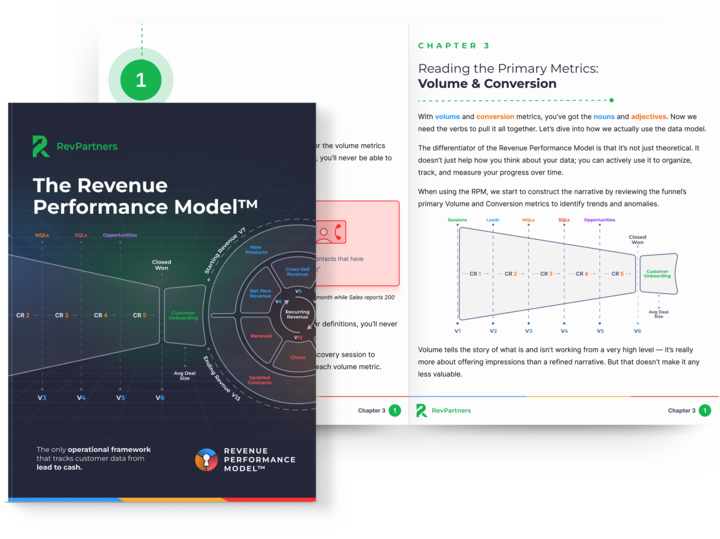
The Revenue Performance Model
Do you want to track the entire revenue journey in your CRM so you can see what's broken, why it happened, and where to fix it?
Download the Revenue Performance Model HERE
-1.png)
-1.png)