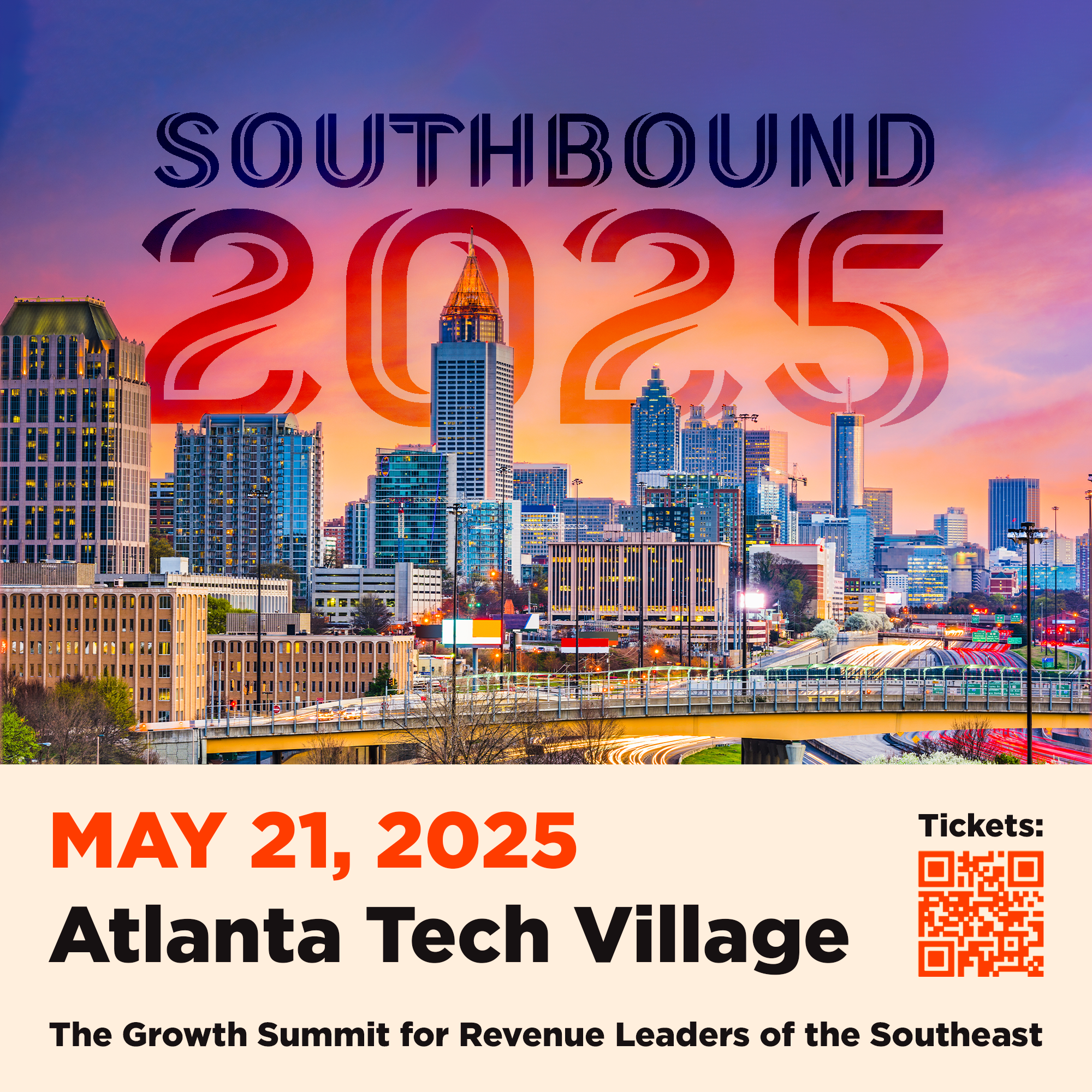
Hear how Go-To-Market leaders are rethinking growth in an age where AI is everywhere but authenticity is rare. Check out all the speakers and sessions from the second annual revenue summit of the South...Southbound!

In session 1, Tim Elmore asks a simple question: how well do we really understand the world we’re living in? A quick “Predict” game proves the point: our instincts are often wrong, and the world has become far less predictable than we assume.
Tim’s core idea is that the biggest shift isn’t just technology or AI, it’s binge culture. Because everything is on-demand and repeatable, people can instantly replace discomfort with dopamine (scrolling, streaming, snacking) until the brain pushes back. The result shows up as lower happiness, higher addiction, less grit, and weaker discipline.
The way forward, Tim explains, is emotional intelligence, leading yourself before leading others, and putting guardrails in place. Boundaries around screens, applying what you learn immediately, limiting social media, reverse mentoring, and choosing grit over quitting help restore balance.👇
In session 2, Horst Schulze makes the point that customers don’t just want the product, they want to feel respected. Most companies “manage the product” and miss what drives loyalty: how people are treated.
Dan Cathy makes it practical with behaviors: name tags, eye contact, small “second mile” moments that make service feel personal. 👇
In session 3, Rachel Downey talks about trust being the difference between pipeline that looks good and revenue that sticks. Between one-time buyers and customers who stay, renew, and refer.
The framework shared is straightforward: people first, media second, AI last. Start with real conversations, use media to spend time with your audience at scale, and let AI amplify your voice. When brands lead with people and story, trust compounds.👇
In session 4, the big takeaway from the panel is that AI is useful when it helps people work better, especially in customer support, inbound, and research. But fully automated outbound still hasn’t been figured out. The real risk isn’t avoiding AI, it’s using it to scale bad processes or create more low-value outreach.
When asked where to invest, all three agreed: team over tools. The companies pulling ahead are led by adaptable, curious people who use AI to enhance human judgment and keep trust and relationships at the center of GTM.👇
In session 5, Sangram Vajre goes over three core ideas:
First: problem → product → platform. Every company goes through these stages, and every transition feels uncomfortable. Most companies fail because they don’t realize they’re in the middle of a shift and overreact instead of adapting.
Second: community becomes the moat. Long before Terminus had scale or budget, they built a movement (Flip My Funnel). It cost almost nothing, pulled in customers, partners, and even competitors, and helped define the category.
Third: ROI has to be obvious to the customer. If buyers can’t clearly explain the value you deliver, you’ll end up competing on price. The strongest companies know exactly how customers describe their value and build around that.👇
In session 6, Donald Miller’s core idea is simple: growth breaks when messaging gets unclear.
Most lose because people can’t quickly tell what they sell, why it matters, or what to do next.
Strong brands use short, repeatable sound bites. That’s how customers remember you. Make them the hero of the story, position yourself as the guide, give them a clear 3-step path, and show what success looks like.👇
The Revenue Performance Model
We got tired of watching good RevOps people get thrown into the deep end with no training.
So we built the Revenue Performance Accelerator courses to help stop faking it learn how to actually do this
Check it out 👇
.png?width=2160&height=2160&name=RPX%20Announcement%20(7).png)

.png)