-3.png)
CRM adoption is the consistent, organization-wide use of a customer relationship management (CRM) platform to manage customer data, sales activities, and revenue operations. By simplifying workflows, automating repetitive tasks, integrating business systems, and improving mobile usability, organizations can increase user adoption, improve data quality, strengthen forecasting, and maximize CRM ROI.
CRM software is hot right now. The industry is growing at 12% per year and will hit $129 billion by 2028.
But….
Upwards of 60% of CRM solution implementations fail.
Why?
It’s not because the software doesn’t work. It's because team members it’s meant to help don’t:
- log in
- update it
- see the value
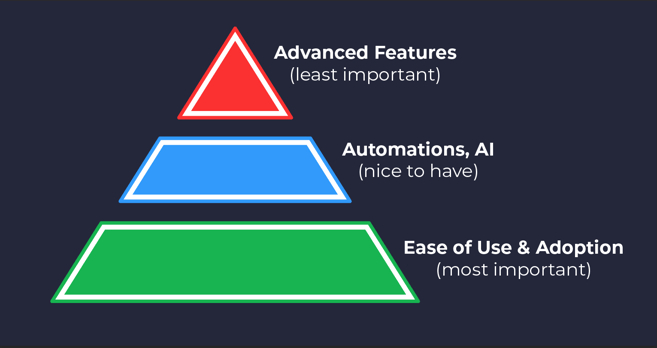
Typically, companies think “more CRM features = better”. And they look for the most customizable, AI-powered, analytics-driven platform and expect their team to embrace it.
But more features don’t equal more adoption. A complicated CRM that disrupts workflows, forces tedious data entry, or doesn’t integrate with the tools teams already use will end up collecting more dust than an Ab Roller 5000 from a 3 am infomercial.
Big truth: The best CRM isn’t the one with the longest feature list. It’s the one that your team relies on every day without thinking twice.
And bonus….businesses that get CRM adoption right don’t just improve efficiency, they see 21-30% more revenue.
Key Takeaways
-
Most CRMs fail because reps don’t use them; they’re clunky, manual, and feel like surveillance.
-
Adoption starts with automation: logging, routing, and follow-ups should happen without clicks.
-
If your CRM isn’t integrated across tools and teams, it’s just a glorified spreadsheet.
-
Mobile UX matters. If reps can’t update deals from the road, they won’t do it later.
-
HubSpot outperforms Salesforce in setup, usability, integration, and actual rep adoption.
But why do so many companies fail at adoption? And how can you be sure yours doesn’t become one of them?
We’ve got some answers for ya….
A CRM is only as powerful as the team using it.
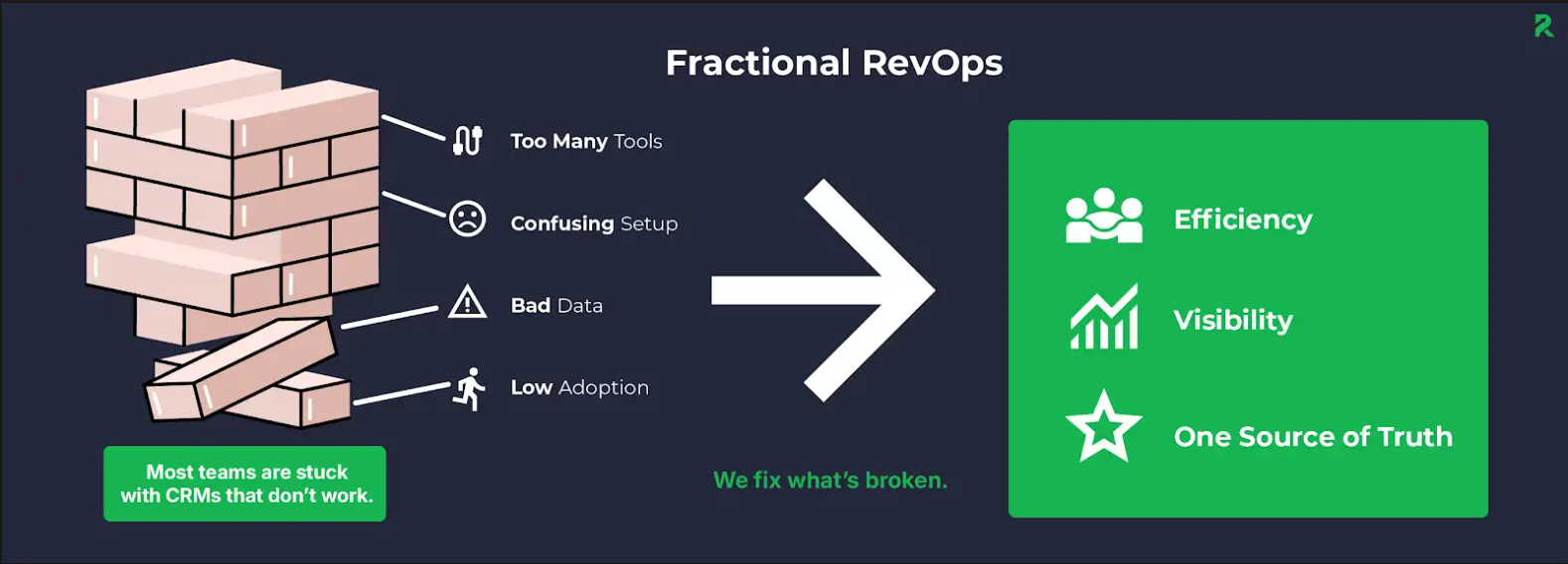
Our Fractional RevOps Services 👇
and Allbound Marketing 👇
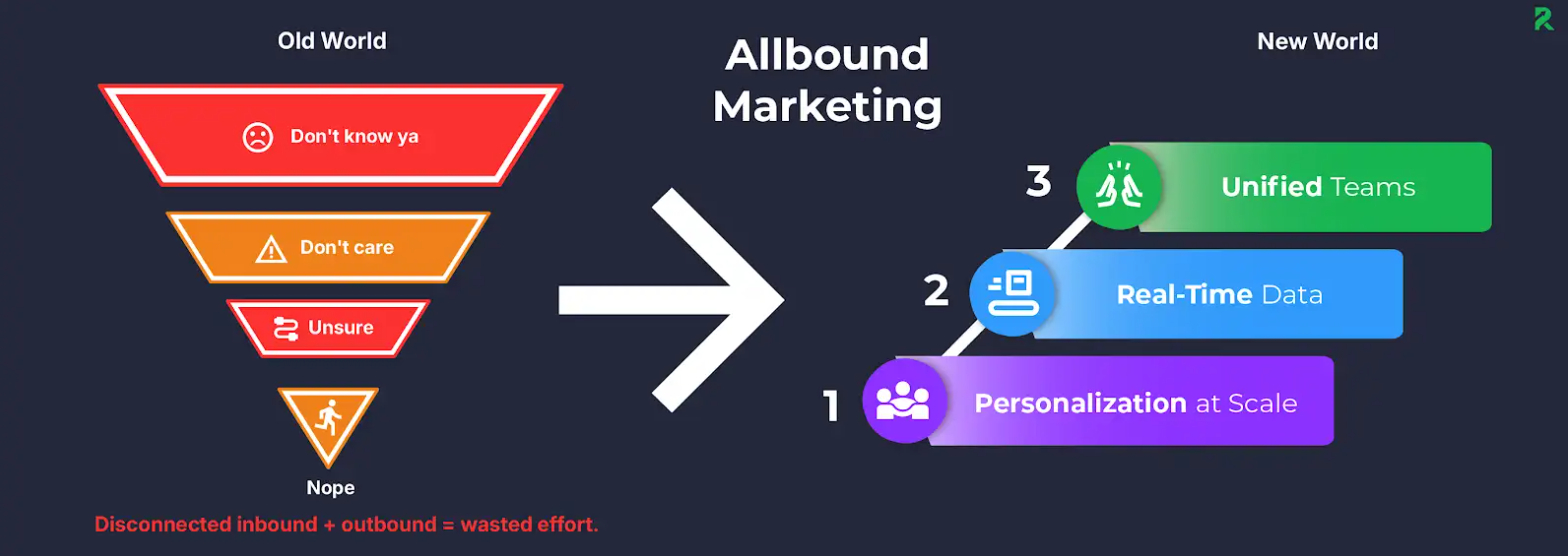
ensure your CRM is set up for adoption, aligning systems, processes, and people to drive real revenue impact.
Why do most CRM implementations fail because of adoption gaps?
If you ask a sales rep what they love most about their job, you’ll hear some form of:
- “Closing deals”
- “Building relationships”
- “Making money”
And here’s what you’ll hear exactly 0% of the time:
- “I love manually entering data into my CRM.”
Because….most CRMs feel like a (micro) management tool, not a sales tool. And that’s why less than 37% of sales reps actually engage in CRM usage.
When a CRM feels like it’s built for oversight rather than productivity, teams WILL find ways to work around it.
Case in point: 83% of executives say CRM adoption is their biggest challenge.
How can you drive CRM adoption by turning it into a revenue engine?
If you want a successful CRM implementation, then it needs to help your team sell more and work less.
Here’s how:
Automate Everything to Improve CRM User Adoption
- Every call, email, and meeting should log automatically.
- Pipeline updates should be one-click, not ten clicks.
- Reminders and follow-ups should be AI-powered.
Tie CRM Adoption to Rep Incentives and Commission Tracking
- If a deal isn’t in the CRM, it doesn’t exist. No CRM, no credit.
- Accurate forecasting should benefit sales reps, not just managers.
- It should help reps prioritize deals, track commissions, and speed up closing cycles.
The Best CRM Is the One Sales Reps Actually Like to Use
- Fast, mobile-friendly, zero friction.
- Integrated with email, calendars, and sales tools.
- Your CRM should suggest next steps and identify hot leads.
It would be easier to find Bigfoot than to find a sales rep who has time to manually move data between mail, calendars, quoting tools, marketing automation, and customer support platforms.
That’s what a CRM is supposed to be for; to create a single, unified view of the customer.
But if your CRM doesn't integrate with the rest of your tech stack, then it really isn’t a CRM. It’s just an expensive spreadsheet.
Watch: Why adding AI to your CRM won’t help if your data is still scattered, and how to approach CRM adoption the right way. 👇
And it’s costing you, because without seamless integration:
- Leads disappear between marketing and sales.
- Customer interactions get lost.
- Reps waste hours hunting for information instead of closing deals.
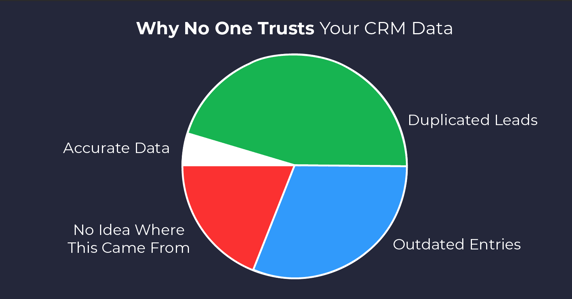
Unfortunately, this is a common problem as 48% of sales leaders say their CRM doesn’t meet their needs.
Watch: How a true data-clearing CRM setup helps every GTM team work from the same truth instead of battling conflicting dashboards. 👇
How can you improve CRM adoption by making it the GTM center?
When your CRM becomes the single source of truth, it eliminates busywork, improves efficiency, and drives real revenue growth.
Here’s how:
Seamless Sync Is Critical for CRM Implementation Success
- Your CRM should auto-connect with email, calendars, quoting tools, and customer support.
- Marketing, sales, and CS should see the same real-time data for better project management
Eliminate Manual Tasks to Increase CRM User Adoption
- Leads from marketing should already be in the CRM.
- Deal updates should be logged automatically.
- Customer history should be synced across every touchpoint.
Full-Funnel Visibility = Better CRM Adoption Across Teams
- Marketing sees what’s driving revenue, not just leads.
- Sales knows exactly what prospects engaged with.
- CS has full deal context before onboarding.
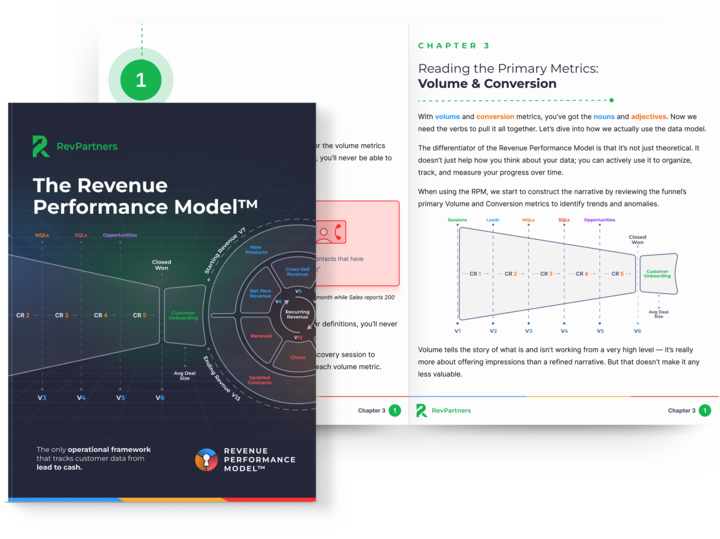
The Revenue Performance Model
Do you want to track the entire revenue journey in your CRM so you can see what's broken, why it happened, and where to fix it?
Download the Revenue Performance Model HERE
If your CRM only works well on a desktop, you’ve got problems. In fact, the businesses leveraging mobile CRM platforms are 150% more likely to exceed their sales goals.
That’s because your sales teams aren’t tied to desks. They’re in meetings, on calls, and out closing deals. Basically, if your CRM isn’t built for mobile, it’s not built for them.
If your CRM treats mobile as an afterthought, that means:
- Entering data is a hassle, so reps just won't bother with it.
- Reps have to wait until they’re back at their desks to update deals.
- Follow-ups get missed and opportunities slip away.
Translation: If your CRM isn’t designed for how sales teams actually work, they won’t use it. Period.
How does a mobile-first approach boost CRM adoption?
Mobile CRMs act as real-time sales assistants.
Here’s how:
The Best CRM Experience Starts with Full Mobile Functionality
- Log calls, update deals, and pull up key insights instantly.
Automation Is the Backbone of CRM Implementation and Adoption
- Updating deals, adding notes, and sending follow-ups should be frictionless.
- Smart autofill, voice-to-text, and AI suggestions should handle the busywork.
Real-Time Alerts Drive CRM Adoption and Rep Engagement
- Follow-ups, deal stage changes, and key customer activity should trigger immediate notifications.
- AI-driven insights should surface hot leads, deal risks, and next steps.
Why is HubSpot better than Salesforce for CRM adoption?
Not all CRMs are built for adoption. (which is bonkers)
Reps are much more likely to adopt a CRM which:
- Is intuitive
- Automates business processes
- Is fast to set up
- Connects seamlessly
HubSpot checks every box. Salesforce doesn’t.
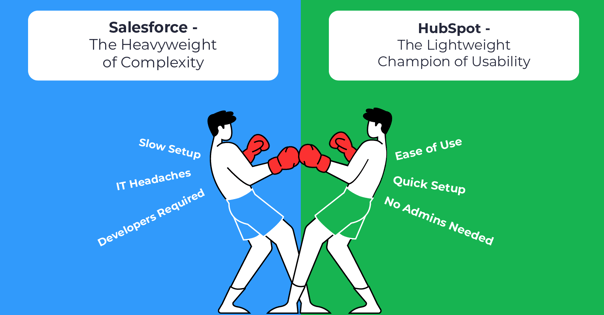
How do HubSpot and Salesforce compare on setup and usability?
HubSpot: Simple, Fast, No IT Team Needed
- HubSpot scores 8.4 on Ease of Setup compared to Salesforce's 7.2, based on approximately 2,200 reviews for each platform.
- Can be managed in-house without third-party developers or consultants.
- Clean, polished, and easy to learn for faster adoption.

Salesforce: Complex, Slow, Requires IT
- Requires admins, developers, and consultants just to set up.
- Customization takes months, not days.
- Steep learning curve leads to slower adoption.
HubSpot = quick start. Salesforce = IT headache.
CRM User Adoption advantage = HubSpot.
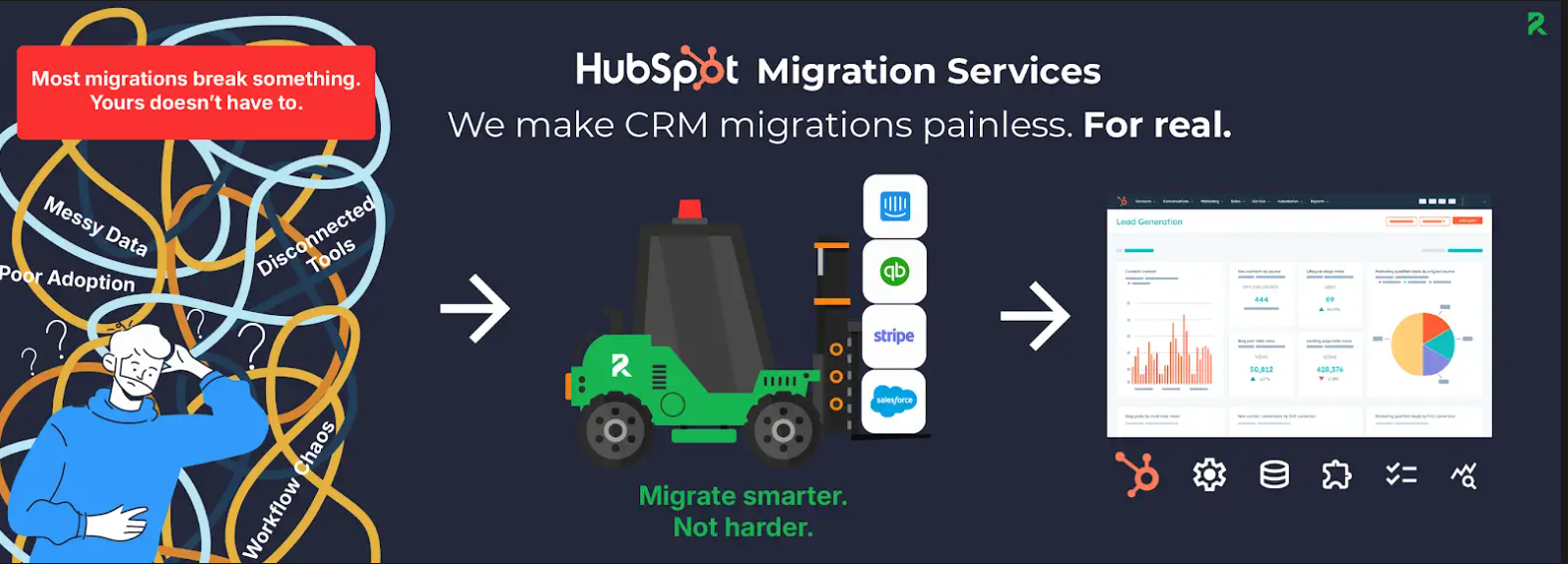
HubSpot Migrations
Switching from Salesforce to HubSpot? We handle the migration, clean your data, and set it up for adoption from day one. 👇
How do sales reps adopt HubSpot vs. Salesforce?
HubSpot: Reps Actually Want to Use It
- HubSpot consistently ranks as the most user-friendly CRM and B2B software, with rep adoption often cited as a key benefit among users.
- Logs calls, emails, and meetings automatically.
- One-click deal updates, AI-driven lead scoring, and fast workflows.
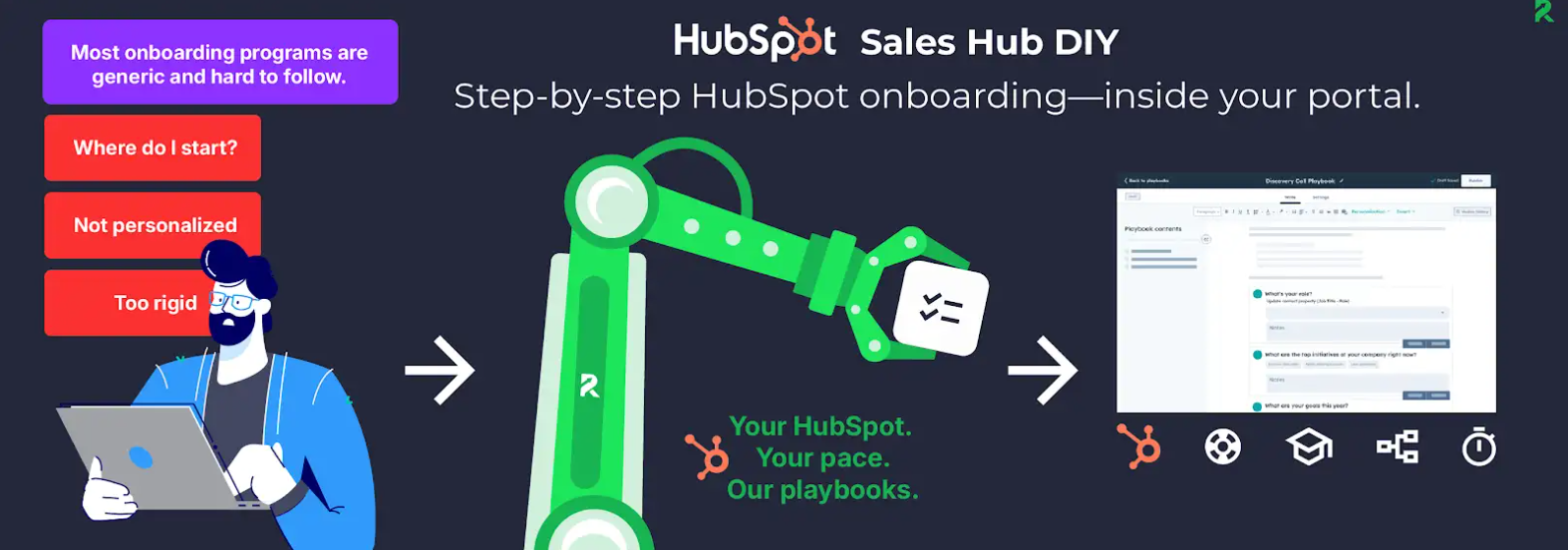
HubSpot DIY
Want to set up HubSpot yourself the right way? Grab our DIY HubSpot onboarding kit. 👇
Salesforce: Clunky and Manual
- Reps spend too much time logging data instead of selling.
- Many companies need dedicated admins just to manage the system.
- Hard to use = Low adoption
HubSpot makes selling easier. Salesforce makes it harder.
How do HubSpot and Salesforce differ on integrations and visibility?
HubSpot: Seamlessly Connected
- HubSpot's out-of-the-box integrations with many marketing and sales tools = quick setup without extensive technical expertise.
- Switching from Salesforce to HubSpot improves data quality due to higher adoption rates.
- Companies migrating from Salesforce to HubSpot report a noticeable increase in efficiency, with a smoother, simpler user experience.
Salesforce: A Mess of Disconnected Tools
- Requires third-party apps, expensive integrations, and API work just to function.
- Sales, marketing, and CS don’t have a single view of the customer.
- Teams waste hours switching between platforms.
If your CRM isn’t fully connected, data gets lost and adoption drops.
HubSpot works out of the box. Salesforce doesn’t.
How can CRM implementation drive adoption instead of resistance?
If your CRM is about as useful as a treadmill doubling as a clothes rack, you're doing it wrong.
The best CRM isn’t the one with the most features, the biggest price tag, or the fanciest AI. It’s the one your team actually adopts.
Recap: Why CRM Adoption Determines CRM Success
To improve CRM adoption across your organization, focus on these priorities:
- Design your CRM around users, not administrators: Simplify workflows, reduce unnecessary clicks, and make the CRM easier to use than spreadsheets or manual tracking.
- Automate repetitive work: Automatically log emails, meetings, calls, lead routing, follow-up tasks, and pipeline updates so teams spend more time selling and less time entering data.
- Connect your entire GTM tech stack: Integrate your CRM with email, calendars, marketing automation, customer success platforms, and other business systems to create one reliable source of customer data.
- Support mobile-first productivity: Give sales teams the ability to update opportunities, access customer information, receive alerts, and manage follow-up activities from anywhere.
- Create clear business value for every user: Use the CRM to improve forecasting, prioritize opportunities, surface buying signals, and support commission tracking so employees see personal value in using the system.
- Measure and improve adoption continuously: Monitor CRM usage, activity logging, data quality, workflow utilization, and forecasting accuracy to identify adoption gaps before they affect business performance.
Frequently Asked Questions About CRM Adoption
What is CRM adoption?
CRM adoption measures how consistently and effectively employees use a CRM platform in their daily work. High CRM adoption means sales, marketing, and customer success teams rely on the CRM as their primary source of truth for customer data and activity.
Why do CRM implementations fail?
Most CRM implementations fail because employees do not consistently use the system after launch.
Common causes include:
- poor user experience
- excessive manual data entry
- weak integrations
- lack of automation
- inadequate training
- unclear business value
The software is rarely the problem. Adoption is.
Why is CRM adoption more important than CRM features?
A CRM with hundreds of features creates little value if employees don't use it.
A simpler CRM with strong adoption often produces better business outcomes than a feature-rich platform with low usage.
Usage drives value, not feature count.
What causes low CRM adoption?
Low CRM adoption usually happens when the CRM feels like administrative work instead of a productivity tool.
Common causes include:
- duplicate data entry
- slow workflows
- poor mobile experience
- disconnected systems
- unclear reporting value
- lack of automation
When users don't see personal benefit, adoption declines.
Why do sales reps avoid using CRMs?
Sales reps are focused on closing deals, not updating records.
If a CRM requires excessive manual work, reps often use spreadsheets, notes, inboxes, or memory instead of the system.
Successful CRM platforms reduce work rather than create more of it.
How do you improve CRM adoption?
The most effective ways to improve CRM adoption include:
- automating activity logging
- simplifying workflows
- improving integrations
- reducing manual data entry
- providing mobile access
- connecting CRM usage to compensation and forecasting
The easier the CRM is to use, the higher adoption becomes.
How does automation increase CRM adoption?
Automation removes repetitive tasks that users dislike.
Examples include:
- automatic call logging
- automatic email logging
- lead routing
- follow-up reminders
- deal updates
- task creation
Less manual work typically leads to higher CRM usage.
Why are CRM integrations important?
CRM integrations eliminate data silos and ensure teams work from a shared source of truth.
Without integrations:
- leads get lost
- customer data becomes fragmented
- reporting becomes unreliable
- users lose trust in the system
Strong integrations improve both adoption and data quality.
What is a CRM source of truth?
A CRM source of truth is a centralized system where customer information, interactions, opportunities, and reporting are stored and maintained consistently across the business.
The goal is to ensure every team works from the same data.
Why is mobile CRM important?
Sales teams often work away from their desks.
Mobile CRM access allows users to:
- update deals
- log notes
- access customer history
- receive alerts
- manage follow-ups
without waiting to return to a computer.
Poor mobile experiences often reduce CRM adoption significantly.
How does CRM adoption impact revenue?
Organizations with high CRM adoption often benefit from:
- better forecasting
- faster follow-up
- improved lead management
- stronger reporting
- cleaner data
- higher sales productivity
These improvements can directly impact revenue performance.
How does HubSpot improve CRM adoption?
HubSpot improves adoption through:
- intuitive design
- automatic activity tracking
- built-in integrations
- mobile accessibility
- simple administration
- streamlined workflows
These features reduce friction for users and increase day-to-day engagement.
Why do companies switch from Salesforce to HubSpot?
Companies often move from Salesforce to HubSpot to improve:
- user adoption
- ease of administration
- implementation speed
- reporting visibility
- data quality
- system usability
The decision is frequently driven by adoption challenges rather than feature limitations.
How do CRM incentives improve adoption?
Many organizations tie CRM usage to:
- commission eligibility
- forecasting accuracy
- pipeline reviews
- performance reporting
When CRM usage directly impacts outcomes important to reps, adoption tends to improve.
What metrics should companies use to measure CRM adoption?
Common CRM adoption metrics include:
- login frequency
- activity logging rate
- deal update frequency
- contact creation rate
- workflow utilization
- mobile usage
- data completeness
- forecasting accuracy
These metrics help identify adoption gaps before they affect revenue performance.
What are the best practices for CRM adoption?
Best practices include:
- automating repetitive tasks
- integrating all major systems
- improving mobile usability
- simplifying workflows
- training users continuously
- aligning incentives
- measuring adoption regularly
- demonstrating business value
Organizations that focus on adoption from the beginning are far more likely to realize CRM ROI.
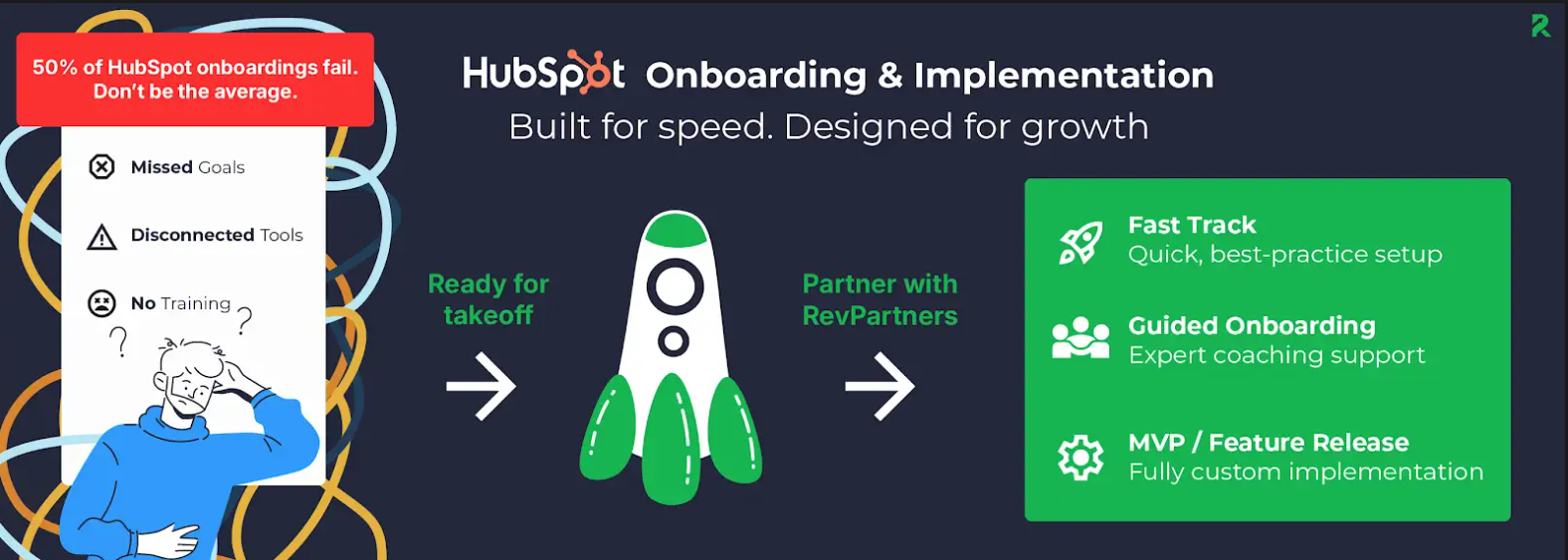
HubSpot Onboarding
Adoption starts with implementation. We onboard teams into HubSpot with workflows that actually get used. 👇
-3.png)