Customer churn is the loss of customers through cancellations, non-renewals, downgrades, or disengagement, and it often begins long before a customer actually leaves. By analyzing usage, lifecycle, support, billing, and engagement data, businesses can predict churn risk, identify why customers are leaving, prioritize at-risk accounts, and take proactive action to improve retention and protect recurring revenue.
Customer churn is one of those problems that almost every company talks about, but very few actually understand well.
At a basic level, customer churn means losing customers.
But the real damage shows up later. When customers churn, revenue doesn’t just dip for a month and bounce back. Forecasts stop lining up, growth slows in ways that are hard to explain, and expansion plans start to fall apart. Teams end up reacting to missed numbers instead of fixing what caused customers to leave in the first place.
In 2026, that reactive approach doesn’t work anymore. Customer acquisition is expensive. Sales cycles are longer. Retention and expansion matter more than ever. Companies that wait until a customer cancels to think about churn are already too late. High-performing teams pair proactive signals with best churn management software to intervene at the moment of cancellation intent — not after the fact.
Check out our webinar on managing retention in HubSpot 👇
The companies doing well today take churn seriously much earlier. They get clear on the customer churn meaning, track the signals that show when customers are starting to disengage, and use customer churn prediction to spot risk before it turns into lost revenue. Instead of guessing, they use data to understand what’s actually happening and step in when it still matters.
This guide is meant to help with exactly that. It covers:
- What customer churn really means and how to define customer churn in a practical way
- How to run customer churn analysis that shows why customers leave, not just who left
- How customer churn prediction works and what it can (and can’t) tell you
- And how to reduce customer churn in a way that’s repeatable and realistic
If you’re trying to understand what is customer churn, figure out how to reduce customer churn, or build a more reliable view of retention, this guide walks through the thinking and mechanics step by step.
What is Customer Churn?
If you’re looking for a simple definition: If a customer leaves, that’s customer churn.
That definition answers what is customer churn, but it doesn’t tell the full story. In real businesses, churn is rarely a single moment or decision. It’s usually the end result of a longer process that started well before a cancellation or non-renewal ever shows up.
Customer Churn Meaning in Practice
The real customer churn meaning comes down to lost value.
Most customers don’t churn because of one bad interaction or a single mistake. They churn because the value they expected slowly fades. Sometimes the product stops fitting their needs. Sometimes adoption stalls. Sometimes they never fully see the return they were promised. By the time churn happens, the decision has often already been made.
Customer churn can show up in several ways, including:
- Cancelled subscriptions
- Non-renewals at the end of a contract
- Downgrades to lower plans
- Accounts that go inactive or dormant
- Lost expansion or upsell opportunities
All of these outcomes point to the same problem: the customer no longer sees enough value to stay fully engaged.
In B2B especially, customer churn is usually lagging. The warning signs (declining usage, lower engagement, unresolved issues) often appear weeks or even months before a contract ends. That’s why customer churn prediction matters. If you wait until churn is visible, you’ve already missed the chance to prevent it.

Why Customer Churn Is More Critical in 2026 Than Ever
In 2026, customer churn isn’t just a Customer Success problem.
It affects revenue, hiring plans, and how confident leadership feels about next quarter. If churn increases, everything else gets harder.
A few things make churn more important today than it used to be.
First, acquiring customers is expensive. Marketing costs are up. Sales cycles are longer. More people are involved in every deal. So when a customer churns, you’re losing subscription revenue along with the time and money it took to win that customer in the first place.
Second, most growth plans now assume customers will stick around and expand. If you don’t reduce customer churn, those expansion assumptions fall apart. Net revenue retention drops and growth slows.
Third, leadership teams want predictability. If you can’t clearly answer what is customer churn, how you define customer churn internally, and what your customer churn analysis is showing, forecasts start to feel unreliable.
Companies that don’t take churn seriously usually fall into predictable patterns:
- They spend heavily to acquire new customers but don’t invest enough in keeping them.
- They wait until renewal time to think about risk.
- They skip proper customer churn analysis and rely on gut feeling.
- They don’t use customer churn prediction, so problems show up too late.
In 2026, churn is usually the result of small signals that were missed: declining usage, stalled onboarding, unresolved issues, or misaligned expectations.
If you understand customer churn meaning clearly, and treat churn as something you can measure, analyze, and improve, you move from reacting to cancellations to preventing them.
How Do You Conduct Effective Customer Churn Analysis?
Customer churn analysis is the process of examining customer behavior, engagement, and lifecycle data to understand why customers leave and how to reduce customer churn before it happens.
If you understand what customer churn is, the next step is figuring out what leads up to it. That’s where analysis becomes useful. The goal is to uncover patterns early enough to act on them.
Strong customer churn analysis answers three simple but important questions:
- Who is churning?
- When are they churning?
- Why are they churning?

Most companies only focus on the first question. They calculate a churn rate and move on. But if you want to reduce customer churn, you need to look at what changed before customers left.
Decreased Usage or Engagement
In most subscription businesses, declining usage is one of the earliest churn indicators.
This may show up as fewer logins, reduced feature usage, shorter sessions, or slower adoption of new features. The key is not the total usage number, it’s the direction of change.
A customer whose activity steadily drops over several weeks is often at higher risk than a customer who has always used the product lightly. Effective customer churn analysis tracks trends over time, including shifts in engagement and stalled adoption after onboarding.
Churn usually begins as a gradual decline, not a sudden cancellation.
Negative Customer Feedback
Customer feedback often provides the first clear signal of dissatisfaction.
Support tickets, low CSAT scores, NPS responses, and survey comments can all point to growing friction. On their own, these signals don’t always mean a customer will churn. But when negative feedback aligns with declining usage, churn risk increases significantly.
Combining behavioral data with sentiment data strengthens both customer churn analysis and customer churn prediction, because patterns become easier to detect early.
Payment and Subscription Signals
Billing issues rarely cause churn by themselves, but they often act as the final step.
Failed payments, downgrades, paused subscriptions, or delayed renewals can indicate weakening engagement. When these signals appear alongside usage decline or unresolved support issues, they become much more meaningful.
Looking at signals together, instead of in isolation, is what separates surface-level reporting from effective churn analysis.
Customer Support Patterns
More support tickets do not automatically mean higher churn risk. What matters is whether issues are resolved quickly and clearly.
Repeated tickets on the same problem, long resolution times, escalations, or consistently low satisfaction after support interactions are stronger warning signs. Support data often reveals deeper product or onboarding gaps that contribute to customer churn over time.
Analyzing Customer Behavior Patterns That Lead to Churn
Customer churn analysis looks at lifecycle stages, customer segments, and funnel behavior to identify patterns that lead to customer churn so teams can act before customers leave.
Check out our HubSpot Academy class on lifecycle stage management in HubSpot 👇
.png?width=1422&height=797&name=shadab%20academy%20main%20(1).png)
Churn usually follows predictable behavior patterns across your customer journey. When you study those patterns, you move from reacting to cancellations to understanding how and why churn develops over time.
Lifecycle Stage Analysis
Most customer churn clusters around specific points in the lifecycle.
Common churn risk stages include:
- Shortly after onboarding
- Before customers reach first value
- After adoption slows or stalls
- In the months leading up to renewal
These moments matter because they represent breakdowns in value delivery. If customers do not fully adopt the product, fail to see clear results, or lose momentum over time, churn risk increases.
Strong customer churn analysis tracks renewal rates and examines where customers disengage during onboarding, adoption, and expansion. This lifecycle view makes it easier to reduce customer churn by fixing the right stage of the journey.
Demographic and Firmographic Patterns
Churn isn't always driven by behavior. Sometimes it starts with fit.
Analyzing churn by company size, industry, use case, or buying motion often reveals that certain segments churn more frequently. In many cases, this points to ICP misalignment rather than product failure.
For example, a product built for mid-market teams may see higher customer churn among very small businesses. Or a self-serve motion may struggle in industries that require heavy implementation support.
Customer churn analysis at the segment level helps refine targeting, messaging, and onboarding, all of which directly help reduce customer churn long term.
Conversion and Funnel Drop-Offs
Low conversion between lifecycle stages is one of the clearest early warning signals of churn.
For example:
- Customers move from onboarding to adoption at low rates
- Adoption does not translate into measurable value
- Expansion stalls even when renewals remain steady
When these transitions weaken, churn often follows.
Treating lifecycle conversion as part of customer churn analysis allows teams to identify friction before customers cancel. Instead of seeing churn as a single event, you begin to see it as a process that unfolds over time.
How to Segment Customers for Customer Churn Analysis
Customer segmentation is a core part of effective customer churn analysis because it turns raw churn data into clear action steps.
If you treat all churn the same, you end up spreading retention efforts evenly, and inefficiently. Segmentation allows you to understand which customers are most at risk, which customers matter most financially, and where to focus if your goal is to reduce customer churn in a practical way.
Customer Value Segmentation
Not all churn has the same impact.
Losing a low-value account is very different from losing a high-value, expansion-ready customer. That’s why strong customer churn analysis starts by segmenting customers based on financial importance.
Common value-based segments include:
- Lifetime value (LTV)
- Revenue contribution
- Expansion or upsell potential
When you segment this way, retention becomes prioritized instead of reactive. High-value customers may justify proactive outreach, executive check-ins, or additional support. Lower-value segments may require automated engagement or scaled programs.
If your goal is to reduce customer churn without overspending on retention, value-based segmentation is essential.
Engagement-Based Segmentation
Customers tend to fall into predictable engagement tiers:
- Healthy: consistently active and engaged
- Watchlist: declining usage or slower adoption
- At-risk: low activity or stalled engagement
These categories make churn risk visible before renewal time.
Engagement segmentation allows teams to intervene earlier. A watchlist customer might need education or onboarding reinforcement. An at-risk customer may need direct outreach or support escalation.
Product Usage Segmentation
Customers also churn for different reasons depending on how they use your product.
Power users may churn if advanced needs aren’t met or if they outgrow current functionality. Occasional users often churn because value was never clearly demonstrated. Dormant users frequently churn because they never fully adopted the product in the first place.
Customer churn analysis that includes product usage patterns helps explain not just who is leaving, but why they are leaving.
Retention strategies must match usage behavior. A power user may need feature expansion or roadmap visibility. A dormant user may need re-onboarding. An occasional user may need clearer value communication.
When segmentation aligns with behavior, efforts to reduce customer churn become more targeted and more effective.
How Do You Build an Accurate Customer Churn Prediction Model?
Customer churn prediction is the process of using data to estimate the likelihood that a customer will leave before they actually churn.
The goal is to generate early, reliable signals that help teams reduce customer churn while there’s still time to act.
An accurate churn prediction model combines the right data, the right structure, and realistic expectations.
Core Components of a Customer Churn Prediction Model
Building a strong model starts with understanding what drives churn in your specific business. While every company is different, most effective customer churn prediction systems rely on four main data categories.
Identifying Relevant Data
High-quality churn models use a combination of:
- Behavioral data, such as product usage, feature adoption, and login frequency
- Operational data, including support tickets, billing history, and renewal timing
- Lifecycle data, like stage progression or onboarding completion
- Account attributes, such as company size, subscription plan, tenure, or industry
The model’s outcome is typically binary:
- 1 = likely to churn
- 0 = likely to retain
But the real value is the probability score that helps prioritize outreach and intervention.
Customer churn prediction becomes more powerful when these data types are combined instead of analyzed separately. Usage decline alone may not predict churn. Usage decline plus unresolved support tickets often does.

Choosing a Method to Predict Customer Churn
There is no single “best” algorithm for customer churn prediction. The right choice depends on your data volume, business complexity, and need for explainability.
Common approaches include:
- Logistic regression, which is straightforward and easy to interpret
- Decision trees, which make predictions based on rule-based splits
- Random forests, which combine multiple trees for stronger accuracy
- Neural networks, which detect deeper and more complex patterns
In practice, model selection matters less than most people think. Data quality and feature relevance typically have a greater impact on accuracy than the algorithm itself.
If your data is incomplete or inconsistent, even advanced models will struggle.
Data Preparation and Feature Engineering
This is where most customer churn prediction efforts succeed or fail.
Raw data rarely performs well on its own. It must be structured in a way that captures meaningful change over time.
Strong preparation includes:
- Normalizing time-based data so customers are compared fairly
- Creating trend-based features instead of static snapshots
- Measuring rate-of-change in engagement or support activity
- Removing redundant or noisy inputs that dilute signal strength
For example, total logins may be less predictive than login decline over the past 30 days. A sudden spike in support tickets may be more meaningful than total ticket volume.

Comparing Customer Churn Prediction Algorithms
Once you have the right data in place, the next step in customer churn prediction is choosing a modeling approach.
Below are the most common algorithms used in customer churn prediction, along with where each one fits best.
Logistic Regression
Logistic regression is often the starting point for customer churn prediction.
It works by estimating the probability that a customer will churn based on weighted input variables. Because it produces clear coefficients, it’s relatively easy to explain which factors increase or decrease churn risk.
It’s best suited for:
- Clear interpretation
- Executive visibility into drivers
- Baseline or early-stage models
The limitation is that logistic regression assumes fairly linear relationships between variables. If churn is driven by more complex interactions, performance may plateau.
That said, many teams successfully reduce customer churn using logistic regression alone, especially when the underlying data is strong.
Decision Trees
Decision trees split customers into groups based on rule-based logic. For example, a model might branch first on usage decline, then on support activity, then on tenure.
They’re intuitive and easy to visualize, which makes them appealing for cross-functional teams.
Decision trees are best when:
- Explainability is important
- Stakeholders need visual clarity
- You want clear “if this, then that” logic
However, without constraints, decision trees can overfit, meaning they perform well on historical data but poorly on new data.
Random Forests
Random forests improve on decision trees by combining many trees together and averaging their predictions.
This approach typically improves accuracy and generalization. It handles mixed data types well and captures more nuanced interactions.
Random forests are strong when:
- Accuracy is a priority
- Data is moderately complex
- You want stronger predictive power without moving to deep learning
The tradeoff is interpretability. While they often outperform single trees, they are harder to explain clearly without additional tooling.
Neural Networks
Neural networks are more advanced models that can detect complex, non-linear relationships across large datasets.
They are powerful when churn is influenced by layered interactions between behavioral, operational, and lifecycle data.
Neural networks are best suited for:
- Large datasets
- Complex engagement patterns
- High-volume subscription environments
The downside is complexity. Neural networks require more data, more tuning, and more technical expertise. They are also less interpretable, which can make it harder to explain churn drivers to executives.
Recap: How to Analyze, Predict, and Reduce Customer Churn
To analyze and reduce customer churn, organizations should focus on:
- Treat churn as a process, not a single event: Look for declining usage, stalled adoption, unresolved issues, negative feedback, downgrades, and other changes that often appear weeks or months before a customer actually leaves.
- Analyze who churns, when they churn, and why: Examine lifecycle stages, customer segments, engagement trends, support history, billing activity, and product usage to uncover the patterns that consistently lead to churn.
- Segment customers by value and behavior: Group customers by LTV, revenue contribution, expansion potential, engagement level, and product usage so retention resources can be focused on the accounts where intervention matters most.
- Build churn prediction around multiple data sources: Combine behavioral data, operational data, lifecycle progression, and account attributes instead of relying on one isolated churn indicator.
- Prioritize data quality over model complexity: Use clean, relevant, trend-based data before investing in more sophisticated algorithms. Changes such as declining logins or increasing support activity can be more predictive than static totals.
- Turn churn predictions into proactive action: Use risk scores and identified churn drivers to trigger re-onboarding, customer success outreach, support escalation, education, or other interventions before the customer reaches renewal.
Frequently Asked Questions About Customer Churn
What is customer churn?
Customer churn is the percentage of customers who stop doing business with a company during a specific period of time. In subscription businesses, churn typically occurs when a customer cancels, does not renew, or downgrades their plan. Understanding what customer churn is helps companies measure retention and long-term revenue health.
How do you define customer churn?
To define customer churn, calculate the number of customers lost during a given timeframe and divide it by the total number of customers at the start of that period. For example, if you start the month with 1,000 customers and lose 50, your customer churn rate is 5%. This definition helps standardize reporting across teams.
What causes customer churn?
Customer churn is usually caused by declining perceived value. Common drivers include poor onboarding, low product adoption, unresolved support issues, pricing misalignment, and weak product-market fit. Effective customer churn analysis identifies which of these factors are affecting your business so you can address them early.
How can companies reduce customer churn?
Companies reduce customer churn by identifying early risk signals, segmenting customers based on value and engagement, and using customer churn prediction models to intervene before renewal. Proactive onboarding, personalized outreach, and improved customer support are some of the most effective retention strategies.
What is customer churn prediction?
Customer churn prediction uses behavioral, operational, and lifecycle data to estimate the likelihood that a customer will leave before they actually churn. These models help teams prioritize outreach and take action earlier, making it easier to reduce customer churn in a structured way.
Why is customer churn analysis important?
Customer churn analysis helps businesses understand why customers leave and where friction appears in the customer journey. By analyzing usage patterns, support activity, and lifecycle transitions, companies can improve retention strategies and protect long-term revenue growth.
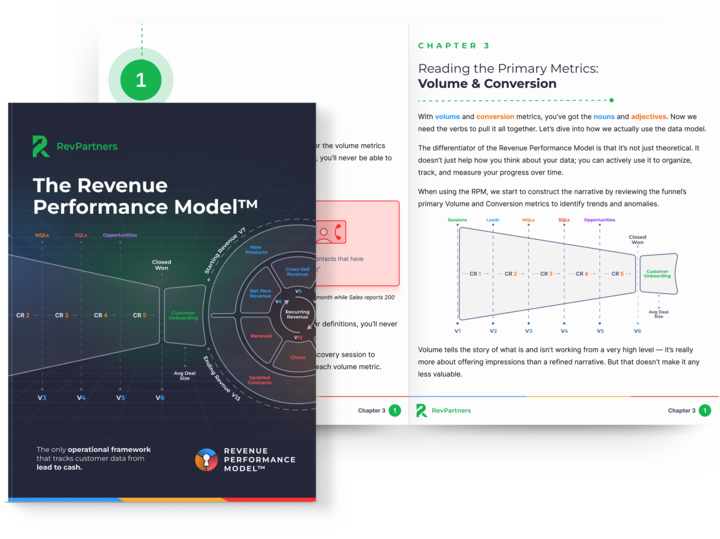
The Revenue Performance Model
Do you want to track the entire revenue journey in your CRM so you can see what's broken, why it happened, and where to fix it?
Download the Revenue Performance Model HERE
-1.png)