
Why is Revenue Operations rising so quickly and taking over modern GTM teams?
Businesses everywhere are seeking RevOps professionals, strategic technicians capable of both high-level planning and hands-on implementation. The rise of this revenue operations role stems from increased complexity, more data, and a lack of clarity between all revenue-generating functions: Sales, Marketing, and Customer Success (CS).
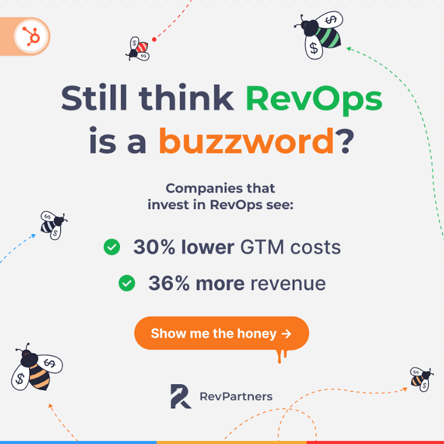
Companies with strong revenue operations achieved 19% faster revenue growth and 15% higher profitability compared to those without a dedicated RevOps function. However, only 35% of companies currently have a RevOps team or are in the process of building one, while 48% of companies still do not have any revenue operations roles.
But how do you know if someone truly understands the RevOps function? And what does that function even mean?
This guide explores what makes a strong RevOps specialist, how to structure an effective RevOps as a Service team, and how to identify the best talent in the hiring process.
TL;DR: RevOps Is the Backbone of Modern Revenue Teams
-
RevOps aligns sales, marketing, and CS into one unified revenue engine
-
Only 35% of companies have RevOps teams, but those that do grow 19% faster
-
Core functions include building strategy, cleaning data, creating scalable processes, and delivering insights
-
Strong RevOps teams blend strategy, systems, and execution using a pod-style structure
-
Top RevOps hires are rare hybrids who are data fluent, process driven, and action oriented
-
Key KPIs include MRR or ARR, close rate, sales velocity, and customer retention
-
The future of RevOps is powered by AI, automation, and specialized roles that support full funnel clarity
What Is RevOps?
Let's Define Rev Ops
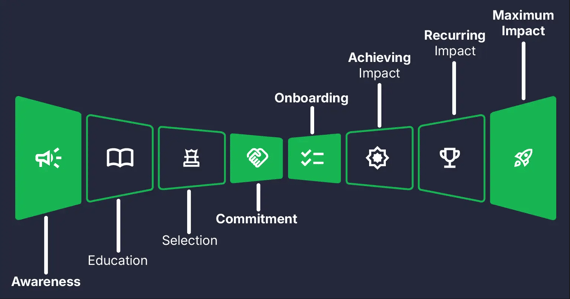
At its core, RevOps aligns sales, marketing, and customer success under a single revenue-driving strategy. By consolidating processes, tools, and data across these functions, businesses can optimize customer journeys, eliminate friction, and increase revenue growth.
This is the framework top RevOps teams are using to grow smarter: read the blog below to learn how the Bowtie Model maps the full revenue lifecycle. 👇
As organizations scale, managing the complexity of revenue generation becomes increasingly challenging. Revenue operations experts help break down silos, align goals across teams, and streamline operations to create a seamless customer experience. Yet, nearly half of all sellers cite incomplete data as their biggest challenge, highlighting the critical need for effective RevOps specialists who can ensure data integrity.

Core Functions of Revenue Operations Teams and What They Deliver
A well-structured RevOps function fulfills these four primary responsibilities:
-
Create Strategy: Develop revenue-driving initiatives aligned across teams.
-
Create Process: Standardize and optimize workflows to ensure efficiency.
-
Create Clean Data: Maintain data integrity across sales, marketing, and CS.
-
Visualize & Translate Data: Turn data into actionable insights for leadership.
Want to learn how to actually diagnose and improve a revenue engine? RevOps 201 walks you through the hands-on process of auditing, mapping, benchmarking, and optimizing revenue performance using R.E.D. 👇
How do you build a scalable RevOps team structure for long-term growth?
A successful RevOps function is not just about hiring one person—it requires a strategic mix of revenue operations roles. At RevPartners, we structure our teams into RevOps Pods, which typically include:
-
RevOps Strategist – The leader who develops strategy, aligns teams, and translates data into business insights.
-
Systems Administrator (Technologist) – The technical expert responsible for CRM, automation, and integrations.
-
Data Engineer – The analytics specialist ensuring data consistency and accuracy.
This team structure ensures that organizations have the right mix of strategic vision, technical execution, and data analysis to optimize their revenue engine.
How do you hire a true RevOps specialist who can do strategy and execution?
The most coveted hire in revenue operations roles is the RevOps specialist—a rare blend of business strategist, technical expert, and process architect. What makes them so valuable? Their ability to bridge strategy and execution while eliminating friction across revenue teams.
Must-Have Traits for High-Impact Rev Ops Talent
A top-tier RevOps specialist should exhibit these essential traits:
-
Data Native: Understands relational databases, data visualization, and data integrity.
-
Clarity Creator: Can simplify complex concepts and communicate them effectively.
-
Process-Oriented: Able to map, refine, and implement scalable processes.
-
Bias Toward Action: Drives forward momentum and decision-making.
-
Strategic Thinker: Can translate business objectives into actionable RevOps initiatives.
Want to get better at RevOps? Our RevOps Fundamentals course is now FREE on YouTube, breaking down the same foundational methodology our Strategists use to build scalable revenue engines 👇
How does RevPartners assess and hire RevOps talent?
Finding the right RevOps professionals takes more than reviewing a resume and asking a few technical questions. You need to understand how someone thinks, communicates, solves problems, and puts their skills to work.
At RevPartners, our interview process is designed to uncover all of that. Candidates move through four stages that look at their experience, role-specific skills, problem-solving ability, and how they can raise the bar for the team.
1. TA Screen
The process starts with a conversational screen with Talent Acquisition. It’s a chance to learn more about the candidate, their experience, and what they’re looking for next while giving them a feel for how RevPartners works.
Communication matters from the start. We look for candidates who can create clarity, get to the point, and be transparent about their experience, goals, and expectations.
What we look for:
- Clear, concise communication
- Relevant experience and career direction
- Transparency about strengths, goals, and expectations
- Early alignment with the role and how RevPartners works
2. WHO Round
Next, the candidate meets with the hiring manager and goes deeper into their professional story. The conversation covers their biggest wins, the challenges they’ve faced, what they learned when things didn’t go according to plan, and how those experiences shaped the way they work today.
It’s also a two-way conversation. Candidates get a clearer picture of the team, the day-to-day responsibilities of the role, and the expectations that come with it.
What we look for:
- A track record of meaningful results
- Ownership of both wins and failures
- Evidence of learning and growth
- Clear thinking about past decisions and experiences
- Strong alignment between the candidate and the role
3. Assessment or Mock Rounds
This is where candidates get to put their skills into practice. Depending on the role, they may complete an assessment or work through a realistic mock scenario that reflects the type of problems they would encounter on the job.
For RevOps roles, that could mean analyzing a process, working through a technical problem, mapping a revenue motion, or explaining how they would approach a real-world scenario. The goal is to see how they think, communicate, solve problems, and create forward momentum.
What we look for:
- Structured problem-solving
- Role-specific technical or strategic skills
- Clear communication and reasoning
- Ability to turn analysis into action
- How candidates respond when the answer isn't immediately obvious
4. Bar Raiser
The final stage looks beyond whether someone can simply perform the job. We want to understand what they’ll bring to the team and how they can help make RevPartners better.
That means looking at how they collaborate, take ownership, support others, continue growing, and bring their own perspective to the work. The goal isn't to hire more of the same. It's to find people who add something to the team while aligning with how we work.
What we look for:
- A servant-minded approach to working with others
- Ownership and stewardship
- A commitment to continued growth
- Strong culture alignment
- A perspective, skill set, or strength that raises the bar for the team
How do you measure Revenue Operations success using the right RevOps KPIs?
Once a RevOps team is in place, how do you measure its impact? Revenue operations KPIs help gauge effectiveness and ROI. Common RevOps KPIs include:
-
Recurring Revenue (ARR/MRR) – The most important metric for engaging leadership, tracked by 73.2% of RevOps professionals.
-
Close Rate – The second most tracked metric in RevOps, monitored by 59.8% of professionals.
-
Marketing Qualified Leads (MQLs) – Surprisingly, the least tracked metric in RevOps, with only 32.9% of professionals focusing on it.
-
Sales Velocity – How quickly deals move through the pipeline.
-
Customer Retention – Evaluating the impact of RevOps for service companies on post-sales success.
By continuously optimizing revenue processes, RevOps experts drive long-term business growth while improving efficiency and decision-making.
What does the future of RevOps look like as AI and automation reshape the role?
The RevOps function will only grow in importance as companies scale. Emerging trends shaping its future include:
-
Automation & AI: Predictive analytics and machine learning to optimize pricing, forecasting, and pipeline management.
-
RevOps Specialization: Increased demand for niche revenue operations roles such as RevOps Data Analysts and Automation Specialists.
-
End-to-End Revenue Visibility: More sophisticated dashboards and real-time insights for leadership teams.
As businesses increasingly adopt a revenue-first mindset, the role of RevOps professionals will continue to expand. Companies that invest in the right RevOps training, RevOps courses, and revenue operations experts today will be the ones that outpace their competition tomorrow.
The Revenue Performance Model
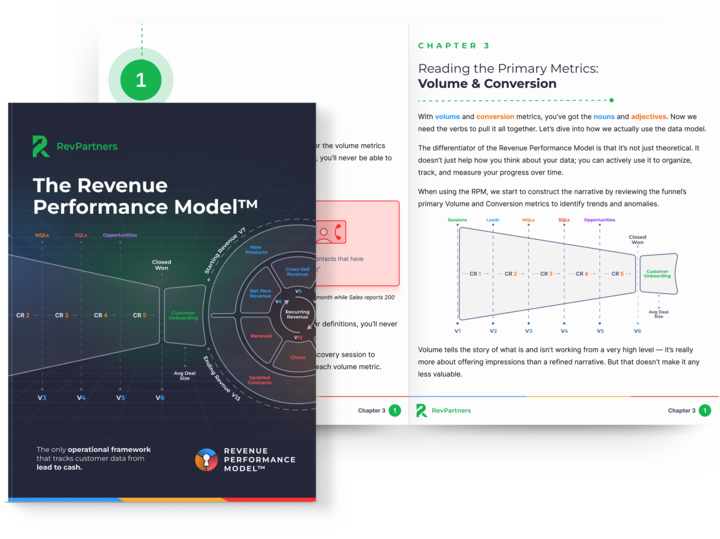
Do you want to track the entire revenue journey in your CRM so you can see what's broken, why it happened, and where to fix it?
Download the Revenue Performance Model HERE
.png)
.png)