-3.png)
Hybrid marketing combines inbound and outbound strategies by using buyer intent signals to trigger personalized outreach at the right time. By connecting HubSpot, Clay, AI-powered enrichment, and automated workflows, businesses can turn engagement into pipeline faster while improving attribution, conversion rates, and sales and marketing alignment.
Which is better: inbound or outbound?
Trick question.
The best marketing teams out there aren’t choosing between the two. They’re combining them.
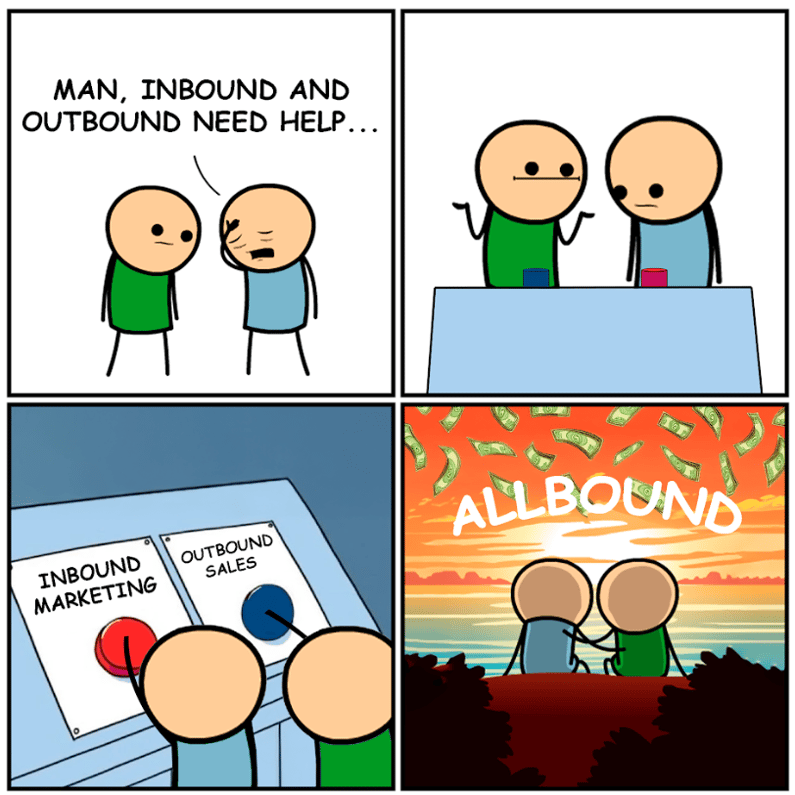
Inbound builds trust and long-term brand equity. Outbound creates urgency and drives pipeline.
On their own? Useful.
Together? Unstoppable.
TL;DR: Hybrid Marketing That Actually Works
-
Inbound signals are gold, but only if you act fast. Track engagement (like pricing views or content downloads) and launch personalized outbound while interest is hot.
-
Paid ads ≠ passive awareness. Use LinkedIn engagement data to trigger outbound plays that feel like a continuation of the ad, not a cold pitch.
-
Clay + HubSpot = your targeting engine. Enrich leads, personalize messaging with Octave, and launch sequences in Smartlead, fully synced via OutboundSync.
-
ABM doesn’t work without behavior. Run vertical-specific ads, track who’s engaging, then push real context into outbound for actual pipeline impact.
-
Hybrid wins because it’s faster, smarter, and connected. Stop forcing a choice between inbound and outbound, and run plays that do both at once.
With that in mind, let’s take a look at three hybrid strategies that combine inbound signals with outbound execution, powered by a modern tech stack:
How do you turn inbound signals into outbound sequences?
Every interaction, downloads, repeat visits, pricing page views, or reading a blog (which 79% of companies say brings positive ROI), is a signal.
The smart teams don’t just score those leads, they start conversations.
This strategy converts inbound activity into outbound outreach while the interest is still warm.
What to Do
- Track buying intent in HubSpot Set up tracking for high-value actions like:
- Pricing or service page views
- Content downloads
- Return visits within a short time window
- Webinar registrations or event signups
- Define your engagement thresholds Not every click = intent. Examples of real buying signals:
- Lead score > 70
- Viewed pricing + downloaded a case study in the past 3 days
- Returned to site 2–3x in a week
- Enrich and qualify with Clay Once a lead crosses your threshold, send them to Clay to:
- Pull job title, seniority, LinkedIn
- Confirm company size, industry, tech stack
- Identify recent hiring or funding activity
- Discover press mentions, investors, sales team size, and relevant context for reps
Check out our webinar on how to leverage RB2B, Clay, and HubSpot to track visitors, personalize engagement, and automate outreach 👇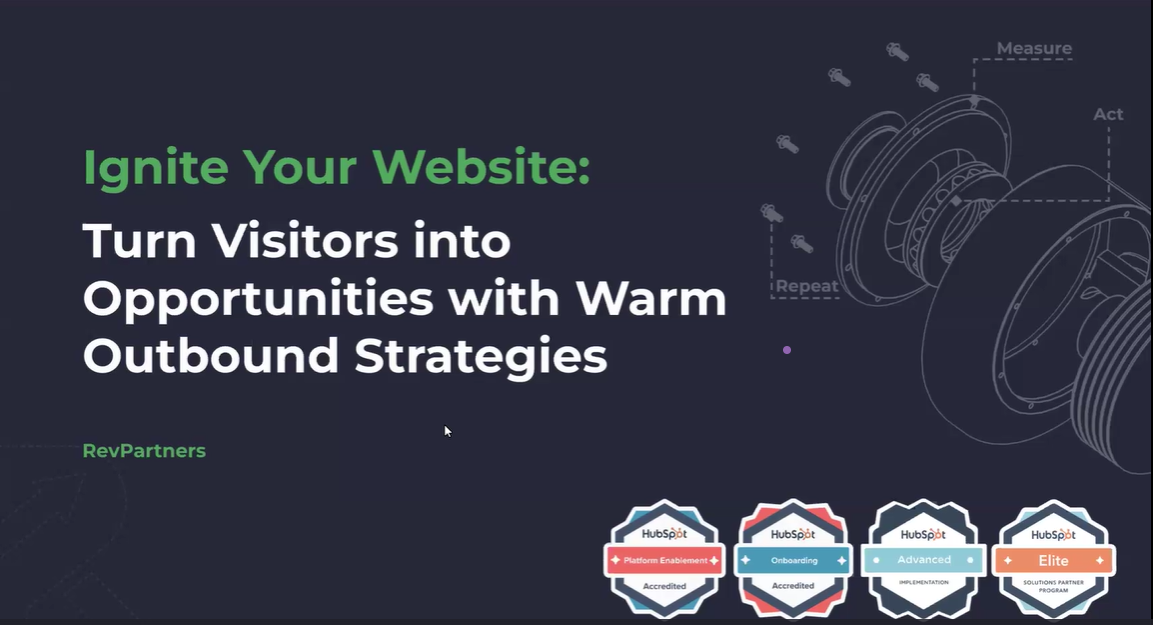
How to Activate
- Personalize messaging inside Clay using Octave Once the contact is enriched, use Octave from within Clay to generate personalized messaging tailored by persona, intent signals, or industry.
- Push leads into outbound via Smartlead or HubSpot
- Cold leads: push into Smartlead sequences
- Previously engaged leads: push into HubSpot sequences
- Sync email engagement with OutboundSync OutboundSync brings Smartlead email data back into HubSpot for unified visibility and performance tracking.
Want even more from Clay? Here's a quick preview of our webinar with them 👇
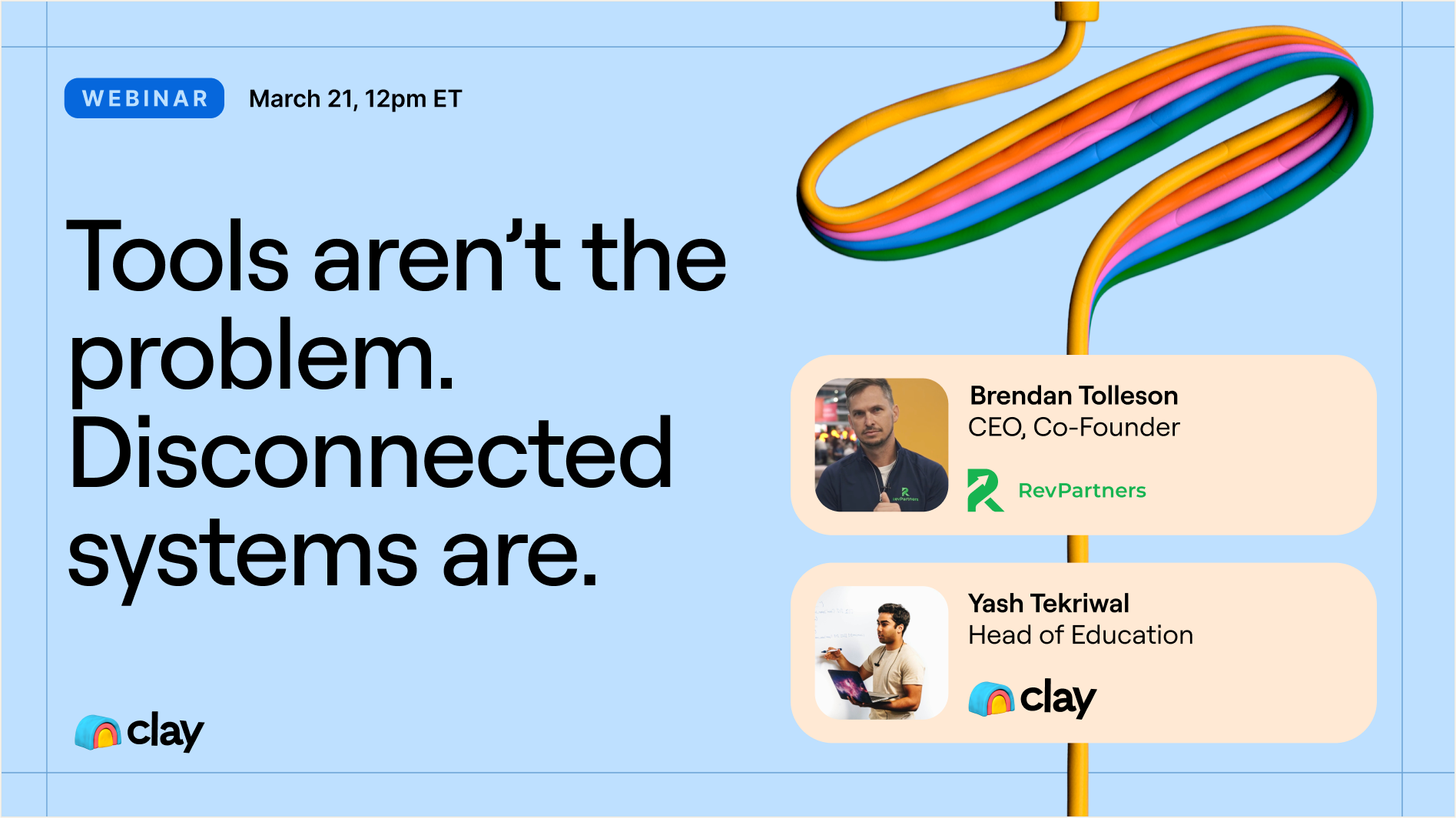
Check out the whole session on real-world GTM workflows, best practices for CRM integration and attribution reporting 👇
How can LinkedIn ad engagement trigger effective outbound outreach?
Not every content consumer is ready to raise their hand. That’s fine. You can still act.
This strategy combines paid awareness with triggered outbound follow-up when engagement crosses a threshold.
What to Do
- Run LinkedIn ads to a named account list
- Use HubSpot to create an active account list
- Sync list to LinkedIn for targeting
- Track engagement with Fibbler
- Monitor which companies show high engagement (clicks, dwell time, interaction)
- Source contacts from high-engagement accounts with Clay
- Identify and enrich decision-makers based on firmographics, roles, and activity
- Personalize messaging with Octave
- Use Octave to generate email copy that aligns with the ad content they interacted with
- Launch sequences in Smartlead
- Push contacts into Smartlead for outbound emails tailored to ad engagement
- Sync all activity in HubSpot via OutboundSync
- Ensure full funnel reporting inside HubSpot for attribution
Optional Add-on
Use Fibbler to improve how you identify accounts with high ad engagement before sourcing contacts.

What to Avoid
- Gated content. Everything here is ungated and value-driven
- Using RB2B for paid distribution (it’s for identifying visitors, not running ads)
How do you run ABM with intent-driven content plays?
ABM is most effective when it feels personalized and helpful, not like a sales ambush.

This play identifies target accounts, delivers content via LinkedIn ads, and triggers outreach based on behavior.
What to Do
- Source accounts with Clay
- Build a TAM list based on ICP using Clay
- Push into HubSpot and create an active list
- Run LinkedIn ads
- Sync company list to LinkedIn via HubSpot
- Serve vertical-specific, value-driven content (playbooks, webinars, checklists)
- Track engagement with Fibbler
- Identify accounts with high interaction
- Source contacts with Clay
- Pull decision-makers from companies engaging with ads
- Personalize messages with Octave
- Use ad interaction context to tailor the hook ("Saw you were checking out our Funnel Playbook...")
- Push to Smartlead + Sync with HubSpot
- Send sequences in Smartlead
- Track engagement via OutboundSync
Recap: How to Build a Hybrid Inbound and Outbound Marketing Strategy
To build an effective hybrid marketing strategy, organizations should focus on:
- Turn inbound engagement into outbound action: Use website visits, content downloads, webinar registrations, ad engagement, and other buying signals to trigger timely, personalized outreach while interest is highest.
- Define meaningful engagement thresholds: Establish clear criteria that indicate buying intent so sales teams focus on qualified prospects instead of reacting to every interaction.
- Enrich and personalize every opportunity: Combine buyer signals with contact enrichment, segmentation, and AI-powered messaging to deliver relevant outreach that reflects each prospect's interests and needs.
- Connect every tool through your CRM: Centralize lead scoring, lifecycle management, automation, attribution, and reporting in HubSpot so inbound and outbound activities work as one coordinated system.
- Align sales and marketing around shared data: Give every team visibility into buyer behavior, campaign performance, and customer interactions to improve collaboration and accelerate pipeline creation.
- Measure and optimize continuously: Track conversion rates, response rates, speed-to-lead, attribution, and pipeline performance to refine your hybrid marketing plays over time.
Why is hybrid inbound + outbound the new normal for GTM?
Hybrid marketing is how top GTM teams move faster, convert more, and build smarter pipeline.
By combining inbound intent with outbound precision, and syncing it all inside HubSpot, you create a smarter pipeline motion that moves faster and closes stronger.
Inbound or outbound? Stop choosing. Start combining.
Frequently Asked Questions About Hybrid Marketing
What is hybrid marketing?
Hybrid marketing combines inbound marketing and outbound sales into one coordinated strategy. Instead of waiting for prospects to convert or relying entirely on cold outreach, hybrid marketing uses buyer signals to trigger personalized outbound engagement at the right time.
What is the difference between inbound and outbound marketing?
Inbound marketing attracts buyers through content, SEO, events, social media, and educational resources.
Outbound marketing proactively reaches potential buyers through email, LinkedIn, advertising, phone calls, and account-based outreach.
Hybrid marketing combines both approaches into a single system.
Is inbound or outbound marketing better?
Neither.
Inbound is excellent for trust-building and long-term demand generation. Outbound is effective for creating urgency and accelerating pipeline creation.
The highest-performing GTM teams use both together rather than choosing one over the other.
What is hybrid inbound and outbound marketing?
Hybrid inbound and outbound marketing uses buyer behavior to trigger sales outreach.
For example, if someone visits your pricing page multiple times, downloads a case study, or engages with your LinkedIn ads, those actions can automatically trigger personalized outbound follow-up.
What is an engagement threshold?
An engagement threshold is a predefined level of buyer activity that signals readiness for sales engagement.
Examples include:
- visiting the pricing page twice
- downloading a case study
- attending a webinar
- returning to the website multiple times
Thresholds help teams focus outreach on higher-intent prospects.
What are buyer intent signals?
Buyer intent signals are behaviors that indicate someone may be researching a solution.
Common signals include:
- pricing page visits
- content downloads
- webinar attendance
- ad engagement
- repeat website visits
- product usage
- LinkedIn engagement
Intent signals help GTM teams prioritize outreach based on actual behavior.
How do you turn inbound signals into outbound outreach?
A typical workflow looks like:
- Prospect engages with content.
- HubSpot tracks the activity.
- Clay enriches the contact.
- Lead scoring evaluates intent.
- Octave generates personalized messaging.
- Smartlead launches outreach.
- OutboundSync sends engagement data back to HubSpot.
This allows teams to engage buyers while interest is still active.
How does Clay support hybrid marketing?
Clay helps hybrid marketing teams:
- enrich contacts
- qualify leads
- identify buying signals
- personalize messaging
- segment audiences
- automate workflows
Clay acts as the execution layer between inbound activity and outbound action.
How does HubSpot support hybrid marketing?
HubSpot serves as the system of record for:
- lead scoring
- lifecycle stages
- workflows
- attribution
- reporting
- campaign management
It helps coordinate inbound and outbound activities inside a single platform.
How can LinkedIn ad engagement trigger outbound outreach?
When a target account repeatedly engages with LinkedIn ads, teams can use tools like Fibbler and Clay to identify decision-makers and trigger outbound sequences that reference the content they interacted with.
This makes outreach feel relevant rather than cold.
What is signal-based marketing?
Signal-based marketing uses real buyer behavior to determine when marketing and sales actions should occur.
Instead of relying on assumptions, signal-based marketing responds to activities like website visits, content engagement, hiring activity, funding announcements, and ad interactions.
How does ABM work with hybrid marketing?
Hybrid marketing makes ABM more effective by adding behavioral signals.
Instead of targeting accounts blindly, teams can prioritize outreach based on actual engagement with ads, content, webinars, and website activity.
This creates more personalized account-based campaigns.
What tools are used in hybrid marketing?
Common hybrid marketing tools include:
- HubSpot
- Clay
- Smartlead
- RB2B
- Vector
- Fibbler
- Octave
- OutboundSync
- Common Room
Together, these tools help teams identify signals, personalize outreach, and measure revenue impact.
What metrics should you track in a hybrid marketing strategy?
Important metrics include:
- MQL-to-SQL conversion rate
- speed-to-lead
- outbound reply rate
- meeting booking rate
- attribution by channel
- opportunity creation rate
- pipeline influenced
- revenue generated
These metrics help connect marketing activity to business outcomes.
What are the benefits of hybrid marketing?
Hybrid marketing helps teams:
- respond faster to buying signals
- improve personalization
- increase conversion rates
- shorten sales cycles
- improve attribution
- align sales and marketing
- generate more qualified pipeline
Because inbound and outbound work together, buyers receive more relevant experiences throughout the journey.
What are the best practices for hybrid marketing?
Best practices include:
- defining engagement thresholds
- tracking buyer intent signals
- enriching leads automatically
- aligning sales and marketing workflows
- personalizing outbound messages
- syncing all activity into the CRM
- measuring attribution consistently
- acting quickly when intent appears
These practices help turn buyer interest into pipeline more efficiently.
Here's how to get started 👇

-3.png)
-4.png)
-4.png)