
Sales and marketing alignment is achieved by building one revenue system instead of managing separate teams. Through a shared Revenue Model, behavior-based handoffs, HubSpot automation, shared KPIs, and RevOps, organizations can eliminate GTM silos, improve collaboration, and drive sustainable revenue growth.
Does your Sales team think Marketing sends junk?
Does Marketing think Sales can’t close?
Key Takeaways
-
Map the full revenue model, not just the funnel. Track every stage from first touch to renewal inside your CRM. Assign owners and define success for each handoff.
-
Use shared KPIs. If Sales and Marketing aren’t measured by the same conversion rates, speed to lead, and retention metrics, they won’t align....no matter how many meetings you hold.
-
Build in attribution. Attribution needs to be natively embedded in your CRM, not living in slides or spreadsheets. If it’s not in the CRM, it didn’t happen.
-
Fix the tech stack. One CRM, one source of truth. Map data flows, eliminate manual processes, and enforce accountability through automation.
-
Shift to behavior-based handoffs. Don’t rely on point-based lead scores. Use real buying signals, like pricing page visits and mid-funnel engagement, to trigger Sales follow-up.
-
Make alignment enforceable. SLAs should be built into workflows and reporting. If no one can see it or measure it, it won’t stick.
Here’s how your teams can get better aligned….permanently.
Why should you stop thinking leads vs deals?
Sales and Marketing aren't two separate systems. But when you treat them like they are, you get alignment issues and broken revenue. And you're not alone as only 8% of companies have strong alignment between their sales and marketing departments.
In 2026, the companies that win manage revenue generation from first touch to long-term expansion.
Why should you map the revenue model, not just the funnel?
You can't fix what you haven't fully mapped. You need to map every major stage, end-to-end:
- First Touch (they hear about you)
- Marketing Engagement (they start interacting)
- Sales Handoff (they show real intent)
- Opportunity Creation (deal gets worked)
- Closed-Won (deal gets closed)
- Onboarding (they become a customer)
- Retention and Expansion (they stay and grow)
At every stage:
- Define the entry and exit conditions.
- Assign clear ownership.
- Agree on what success looks like.
How do you find the leaks early in your revenue process?
Most companies assume alignment breaks during hand-offs. It does.
But it also breaks earlier and later.
Leaks show up anywhere the process slows down, ownership gets unclear, or expectations aren't set properly.
Common places to look:
- Leads that stall between nurture and Sales engagement. In fact, 53% of organizations report misalignment at this hand-off stage, and less than 35% of engaged contacts even get a follow-up.
- Slow or inconsistent Sales follow-up.
- Poor onboarding leading to early churn.
How to spot leaks:
- Funnel Conversion Audits: Where do prospects stop moving forward?
- Speed-to-Lead Diagnostics: How fast does Sales actually respond?
- Post-Sale Journey Reviews: Are customers getting what they were promised, immediately?
Key Action: Build the Revenue Model Inside HubSpot
Don’t map your model in slides. Build it into the CRM where it runs live.
- Configure clear lifecycle stages.
- Define and assign ownership for each stage.
- Track every conversion point automatically.
- Review weekly.
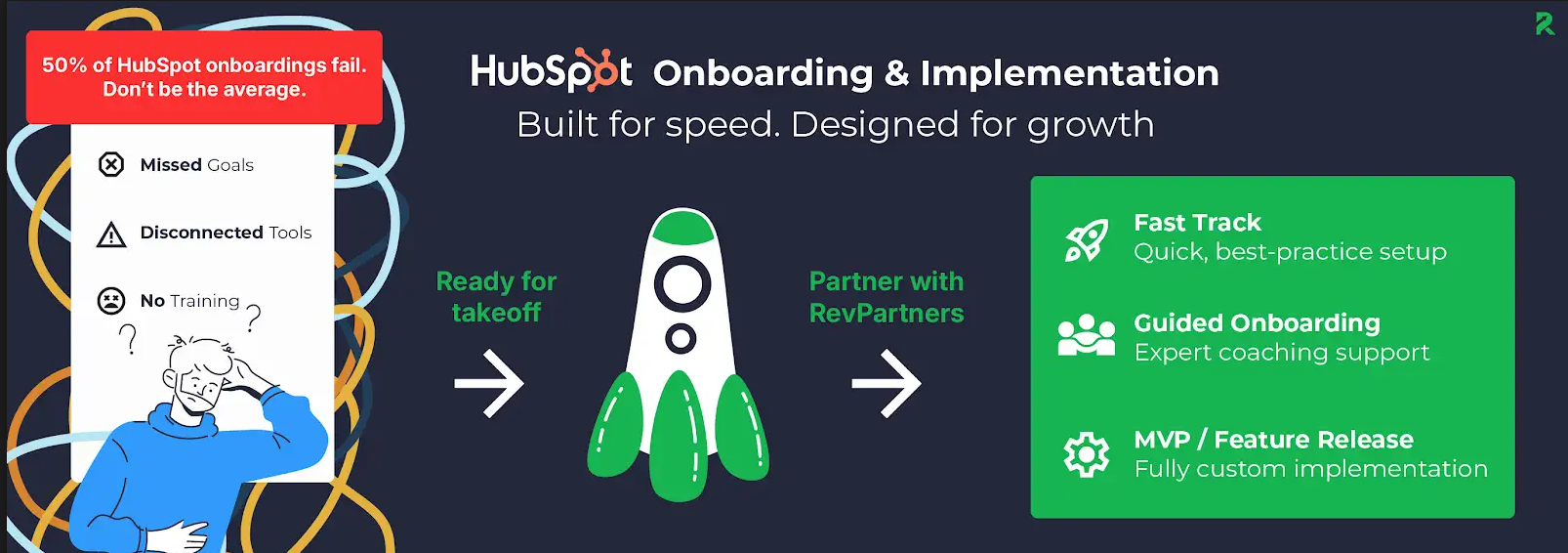
HubSpot Onboarding
Want to build your revenue model directly in HubSpot without guesswork? Our HubSpot onboarding service sets it up right the first time—lifecycle stages, handoffs, and reporting all configured for scale. 👇
Which metrics actually force sales–marketing alignment?
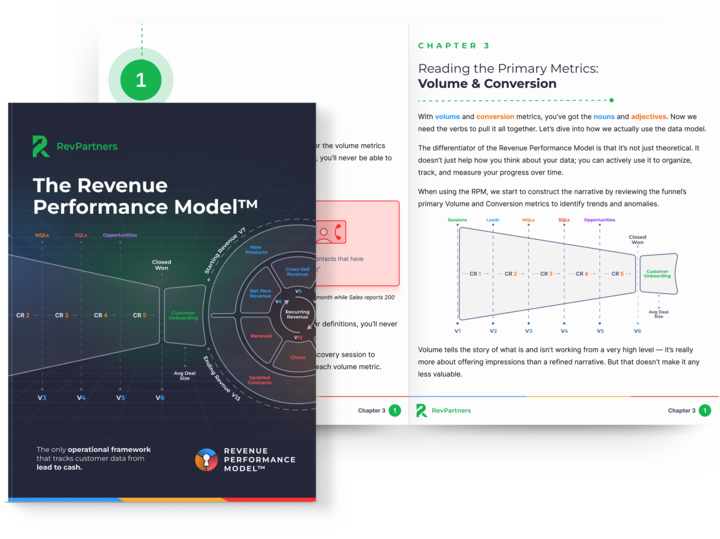
The Revenue Performance Model
Do you want to track the entire revenue journey in your CRM so you can see what's broken, why it happened, and where to fix it?
Download the Revenue Performance Model HERE
Marketing and sales teams don’t align through more meetings.
They align through shared goals, and when they do, companies report up to 208% more revenue from their marketing efforts.
Why do marketing and sales need to own the same KPIs?
Separate metrics guarantee separate priorities.
If Marketing gets judged on lead volume and Sales gets judged on closed deals, Marketing will celebrate "hitting goals" while Sales misses quota.
Here’s a minimum set of shared KPIs:
- Lead-to-Opportunity Conversion Rate (are the leads any good?)
- Speed to Lead (how fast does Sales follow up?)
- Opportunity-to-Close Conversion Rate (can Sales actually close?)
- Customer Retention and Expansion Rates (do customers stay and buy more?)
- Attribution Accuracy (can you actually prove where deals came from?).
Key Action: Install a Weekly KPI Review Meeting
Don’t review performance once a quarter and act surprised.
You need a standing meeting where both Sales and Marketing leaders:
- Review conversion metrics
- Look at lead quality and follow-up speed
- Spot leaks early and fix them immediately
How do you align your tech for GTM alignment?
You can’t run Sales and Marketing out of different systems and expect things to go well.
If the data isn’t centralized, the strategy won’t be either.
Watch: Here’s why fragmented tooling and unclear ownership are killing GTM alignment—and how GTM engineers help fix it. ⬇️
Why use one CRM for all revenue data?
If Marketing works in one platform and Sales works in another, here’s what usually happens:
- Marketing captures a lead.
- Sales sees a name with no context.
- Attribution gets lost.
- Follow-up is delayed.
- The opportunity never materializes, and no one knows why.
Why does attribution have to be native to the CRM?
Attribution doesn’t work if it lives in a slide deck.
It needs to be tied directly to every Contact, Company, and Deal inside the CRM.
That means:
- UTM parameters captured and stored automatically
- First touch, lead source, and key engagement fields populated without manual input
- Every deal record shows exactly how that person got there, not just who closed them. And it matters as Marketing influences up to 29% of the pipeline when alignment is strong, compared to just 10% when it’s not.
If someone needs to check a spreadsheet to figure out where a deal came from, you're in bad shape.
How do you audit the tech stack for breakpoints?
Most alignment issues are rooted in the tech stack, but show up later as pipeline or reporting issues.
Wanna fix it? Start here:
- List every tool used across Sales and Marketing.
- Map where data enters, and how it moves (or doesn’t).
- Identify what’s automated vs. what relies on a person remembering.
- Document every place where something regularly falls through the cracks.
If It’s Not in the CRM, It Didn’t Happen
This rule solves a lot of problems quickly.
If a lead, interaction, or deal can’t be traced in the CRM:
- It doesn’t exist for reporting
- It can’t be used to make decisions
- It doesn’t help with alignment…or with building customer relationships
Watch: How a GTM engineer routes clean, unified data across tools and teams—so Sales and Marketing stop arguing over mismatched metrics. ⬇️
Why don’t revenue teams happen by accident?
You can’t fix alignment issues with meetings. You fix them by designing your teams, handoffs, and rules of engagement around the Revenue Model, not job titles.
How do you design around the actual flow of revenue?
Forget the org chart for a minute. Look at how revenue actually moves through your system:
- How does someone go from “I’ve never heard of you” to “I just signed a contract”?
- Who owns what at each stage?
- What do they need in order to execute that handoff cleanly?
Sales and Marketing need to know:
- What they own
- What qualifies as complete work
- What they receive from the prior stage
- What they’re responsible for delivering next
Why should handoffs be based on behavior, not lead scores?
Lead scoring is a lot of guesswork.
Clicking two blog posts and opening three emails doesn’t mean someone’s ready to talk to Sales.
A webinar attendee is not automatically a sales qualified lead.
Instead, shift your qualification logic toward observable buying behavior:
- Viewed the pricing page multiple times
- Returned to the site after direct outreach
- Engaged with mid-funnel content (like comparison guides or product videos)
- When Marketing warms the lead first, Sales converts 65% more prospects into pipeline compared to cold outreach.
- When Marketing warms the lead first, Sales converts 65% more prospects into pipeline compared to cold outreach.
- Reached out through a high-intent CTA (e.g., demo or sales conversation)
Then define minimum requirements for handoff:
- ICP match
- Clear intent signals
- Required data fields complete (industry, company size, etc.)
This removes subjectivity from handoffs and gives Sales what they need to follow up with context.
How do you write SLAs that can be enforced in the CRM?
Most SLAs sound great in planning meetings and break down immediately in execution.
A real SLA:
- Can be measured directly in your CRM
- Is visible across both teams
- Triggers action if it’s missed
Examples that work:
- Inbound demo requests must be contacted by Sales within 15 minutes during business hours
- Marketing leads passed to Sales must meet three minimum data and behavior criteria
- Follow-up outcomes (attempted, connected, qualified) must be logged within 24 hours
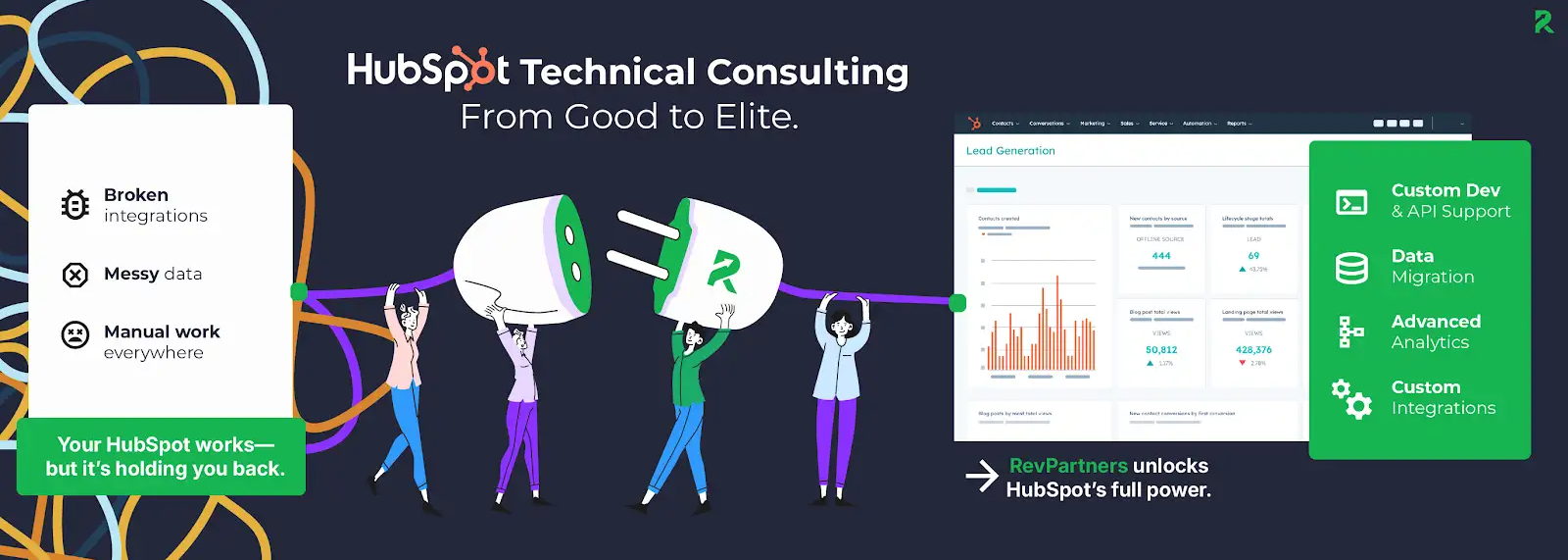
HubSpot Technical Consulting
Need custom automation, attribution tracking, or SLA enforcement inside HubSpot? Our technical consulting team builds the backend so RevOps runs on rails. 👇
How do you stop allowing sales–marketing misalignment?
Misalignment between Sales and Marketing is caused more by structure than people.
Here’s the quick wrap up for a new structure:
- Map the full Revenue Model.
Start with first touch. End with expansion. Define every stage, owner, and success condition. - Standardize definitions.
What counts as a qualified lead? What triggers a handoff? Build it into the CRM. - Align on shared KPIs.
Use metrics that reflect actual revenue performance (conversion rates, speed to lead, retention) not vanity numbers. - Operationalize handoffs.
Use behavior-based triggers, not point scores. Enforce SLA rules with automation. - Unify your tech.
Use one CRM as the single source of truth. - Align incentives.
Tie both teams to outcomes that matter: pipeline quality, deal velocity, and revenue closed. The difference is stark as companies with strong alignment grow 20% annually, while those without see revenue decline by 4%.
If your system doesn’t force alignment, it won’t happen.
Build a system that makes misalignment impossible. When you do, the payoff is real: companies with aligned Sales and Marketing teams grow 32% year over year.
How do you align with Allbound as a Service?
You’ve mapped the revenue model, built shared KPIs, and unified the CRM.
But alignment only works if your go-to-market motion supports it.
That’s where Allbound as a Service (AaaS) comes in.

Instead of running inbound and outbound as separate, competing plays, AaaS merges them into one continuous revenue engine built to generate pipeline. Sales and Marketing finally run one motion, report on the same metrics, and work toward the same outcome: revenue.
Allbound Marketing
Alignment starts with execution. Our Allbound Marketing service unifies inbound, outbound, and paid into one GTM system built for predictable pipeline. 👇
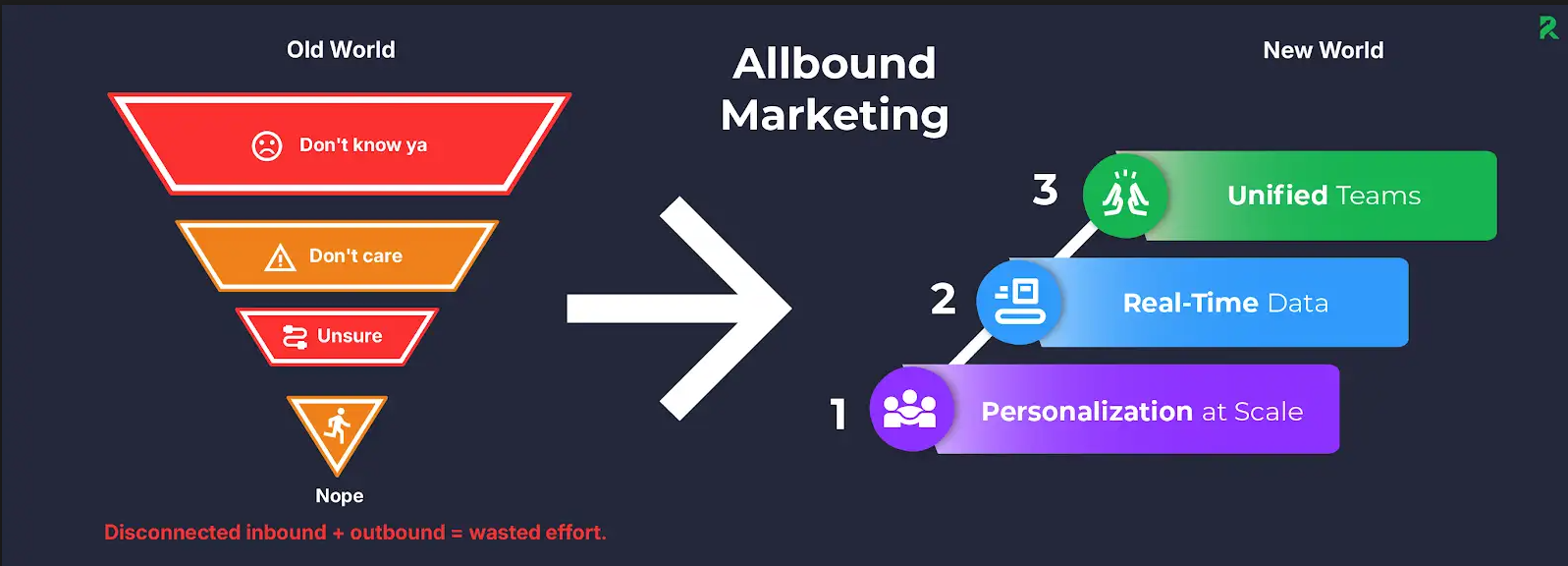
What does that look like in practice?
- AI-driven targeting to identify high-intent buyers early
- Multi-channel campaigns (SEO, paid, social, outbound) launched in sync
- Personalized outreach powered by actual buyer behavior
- Shared attribution and KPIs tracked directly in HubSpot
- Pre-warmed leads, ready for sales the moment they raise their hand
Recap: How to Align Sales and Marketing with a Revenue Model
To improve sales and marketing alignment, organizations should focus on:
- Map the entire revenue journey: Define every stage from first touch through onboarding, retention, and expansion with clear ownership, entry criteria, and exit criteria.
- Measure success with shared KPIs: Align sales and marketing around metrics such as lead-to-opportunity conversion, speed to lead, opportunity win rate, retention, expansion, and attribution accuracy.
- Centralize your revenue data: Use one CRM as the single source of truth where attribution, lifecycle stages, customer activity, and reporting are managed together.
- Build behavior-based handoffs: Trigger sales engagement using real buying signals and ICP fit instead of relying solely on traditional lead scoring models.
- Enforce accountability through automation: Configure SLAs, workflows, notifications, and reporting so every handoff is measurable and consistently executed.
- Review and optimize continuously: Conduct regular revenue reviews to identify bottlenecks, improve conversion rates, strengthen collaboration, and refine the customer journey over time.
Frequently Asked Questions About Sales and Marketing Alignment
What is sales and marketing alignment?
Sales and marketing alignment is the process of getting both teams to operate from shared goals, shared lifecycle stages, shared CRM data, and shared accountability for revenue generation instead of working as disconnected departments.
What is a Revenue Model?
A Revenue Model is a complete operational map of the customer journey that tracks every stage from first touch through retention and expansion. Unlike a traditional funnel, it includes ownership, handoffs, reporting, and post-sale growth stages.
Why do sales and marketing teams become misaligned?
Misalignment usually happens because teams use different KPIs, disconnected tools, inconsistent lead definitions, weak handoffs, and separate reporting systems that create conflicting priorities.
What is a behavior-based handoff?
A behavior-based handoff is a sales qualification trigger based on real buying intent instead of arbitrary lead scores.
Examples include:
- repeated pricing-page visits
- competitor comparison downloads
- demo requests
- mid-funnel engagement
- return visits after outreach
Why are traditional lead scores unreliable?
Traditional lead scoring often overweights low-intent actions like email opens or blog clicks instead of focusing on actual buying behavior and ICP fit.
This creates poor handoffs and low-quality pipeline.
What KPIs should sales and marketing teams share?
Important shared KPIs include:
- lead-to-opportunity conversion rate
- speed to lead
- opportunity-to-close rate
- retention
- expansion revenue
- attribution accuracy
- pipeline velocity
Shared KPIs help both teams stay accountable to revenue outcomes instead of vanity metrics.
Why does attribution need to live inside the CRM?
Attribution only works when it’s tied directly to contacts, companies, and deals inside the CRM. If attribution lives in spreadsheets or slide decks, teams lose visibility into how pipeline and revenue were actually generated.
How does HubSpot improve sales and marketing alignment?
HubSpot centralizes lifecycle stages, workflows, attribution, reporting, lead routing, and CRM data into one shared system so Sales and Marketing operate from the same information.
Why do disconnected GTM tools create alignment problems?
Disconnected tools create attribution gaps, inconsistent reporting, delayed follow-up, duplicate records, weak handoffs, and fragmented customer visibility that break trust between teams.
How do you operationalize SLAs in HubSpot?
Teams operationalize SLAs using workflows, automation, and reporting dashboards that track response times, handoff requirements, lifecycle progression, and follow-up completion directly inside HubSpot.
Why should inbound and outbound campaigns work together?
Inbound and outbound campaigns perform better together because both teams share targeting, messaging, attribution, and buyer context instead of competing through disconnected GTM motions.
What is Allbound as a Service?
Allbound as a Service (AaaS) is a GTM model that combines inbound marketing, outbound prospecting, paid campaigns, CRM orchestration, and RevOps into one coordinated revenue engine.
What are the best practices for sales and marketing alignment?
Best practices include:
- mapping the full Revenue Model
- standardizing lifecycle definitions
- aligning shared KPIs
- operationalizing handoffs
- centralizing attribution
- enforcing SLAs in the CRM
- unifying inbound and outbound
- reviewing funnel performance weekly
These practices help GTM teams improve pipeline quality, conversion rates, and revenue visibility.
Want to see how AaaS makes alignment automatic? 👇


-3.png)
-3.png)